


Choosing the right HVAC system is one of the most important decisions in any residential, commercial, or industrial building. The system you select affects indoor comfort, energy consumption, air quality, maintenance needs, installation cost, and long-term operating performance.
There is no single HVAC system that works perfectly for every project. A small villa, a retail store, a hotel, a hospital, a warehouse, and a large industrial facility all have different cooling loads, airflow needs, zoning requirements, operating hours, and maintenance expectations.
That is why understanding the main types of HVAC systems is essential before choosing a system. In this guide, we compare the most common HVAC system types, including Split systems, Ductless HVAC, Package Units, VRF, VAV, and Chiller systems, while explaining where each system works best and how complementary solutions such as air curtains can help improve HVAC efficiency.
Table of Contents
ToggleWhat Are HVAC Systems?
An HVAC system is responsible for controlling indoor temperature, ventilation, airflow, humidity, and indoor air quality.
In hot climates such as Saudi Arabia, the cooling side of HVAC is usually the most important part. However, HVAC is not only about cooling. A complete HVAC system may include:
- Cooling equipment
- Heating equipment
- Ventilation systems
- Air filtration
- Ductwork or refrigerant piping
- Air handling units
- Fan coil units
- Thermostats and controls
- Sensors and automation systems
The right HVAC system should match the building’s size, use, occupancy level, internal heat load, outdoor climate, required comfort level, and energy-efficiency goals.
Main Types of HVAC Systems
1. Split HVAC Systems
A Split HVAC system is one of the most common Types of HVAC Systems, especially in residential and small commercial buildings. It usually includes an indoor unit and an outdoor unit.
The indoor unit delivers conditioned air into the room, while the outdoor unit rejects heat outside the building.
Split systems are popular because they are simple, widely available, relatively affordable, and suitable for spaces that do not require complex zoning or centralized control.
Best Uses for Split HVAC Systems
Split systems are usually suitable for:
- Apartments
- Villas
- Small offices
- Small retail units
- Individual rooms
- Low-rise residential buildings
- Small clinics or service spaces
Advantages of Split Systems
- Lower initial cost: Split systems are usually more affordable than central HVAC systems.
- Simple installation: They are easier to install compared to large ducted or chilled water systems.
- Good for individual spaces: They work well when each room or area needs independent cooling.
- Easy replacement: Replacing one split unit is usually simpler than replacing part of a central system.
Limitations of Split Systems
- Limited scalability: They are not ideal for large buildings with many zones.
- Multiple outdoor units: Large projects may require many outdoor units, which can affect appearance and maintenance.
- Less centralized control: Managing many separate units can become inefficient.
- Ventilation limitations: Many split systems mainly recirculate indoor air and may need separate ventilation solutions.
When to Choose a Split System?
Choose a Split HVAC system when the project is small, the budget is limited, and the building does not need advanced zoning, centralized monitoring, or large-scale ventilation.
2. Ductless HVAC Systems
A Ductless HVAC system, often called a ductless mini-split, works without traditional ductwork. It typically includes one outdoor unit connected to one or more indoor units.
Ductless systems are useful when installing ducts is difficult, expensive, or unnecessary. They are also effective for room-by-room temperature control.
Best Uses for Ductless HVAC
Ductless systems are suitable for:
- Villas
- Room additions
- Renovated spaces
- Small shops
- Offices without ductwork
- Server rooms
- Small restaurants
- Spaces needing independent control
Advantages of Ductless HVAC
- No ductwork required: This reduces installation complexity in existing buildings.
- Zone control: Each indoor unit can be controlled separately.
- Good energy performance for small zones: Cooling only occupied zones can reduce waste.
- Flexible installation: Indoor units can be wall-mounted, ceiling-mounted, or concealed depending on the model.
Limitations of Ductless HVAC
- Visible indoor units: Wall-mounted indoor units may not suit every interior design.
- Higher cost per zone: If many rooms need cooling, the system cost can increase.
- Limited fresh air: Like split units, ductless systems may require a separate ventilation strategy.
- Maintenance across multiple units: Filters and indoor units must be cleaned individually.
Is Ductless HVAC Suitable for Hot Climates?
Yes, ductless types of hvac systems can be suitable for hot climates when properly sized and selected. However, in large buildings or high-traffic commercial facilities, ductless systems may not be enough on their own because ventilation, fresh air, and entrance air loss must also be addressed.
3. Package HVAC Units
A Package HVAC Unit combines major heating and cooling components into one unit, often installed on rooftops or outdoor areas.
These types of hvac systems are common in commercial buildings because they save indoor space and can serve larger open areas.
ENERGY STAR notes that certified light commercial HVAC equipment can be around 17% more efficient than standard equipment, and also highlights that at least 25% of rooftop HVAC units are oversized, which can increase energy costs and equipment wear.
This makes proper sizing especially important when selecting Package Units.
Best Uses for Package Units
Package HVAC units are commonly used in:
- Retail stores
- Restaurants
- Small malls
- Supermarkets
- Warehouses
- Showrooms
- Schools
- Low-rise commercial buildings
- Light commercial facilities
Advantages of Package Units
- All-in-one design: Main components are housed in one unit.
- Saves indoor space: Most equipment is installed outside or on the rooftop.
- Good for commercial spaces: Package Units can serve medium-sized open areas effectively.
- Easier maintenance access: Technicians can often service rooftop units without disturbing indoor activities.
- Suitable for repeated layouts: Retail chains and restaurants often use packaged systems because they are practical and standardized.
Limitations of Package Units
- Less zoning flexibility: A single package unit may not provide precise temperature control for many different zones.
- Rooftop access required: Maintenance depends on safe and practical rooftop access.
- Oversizing risk: Oversized units can cycle frequently, reduce comfort, and increase energy use.
- Outdoor exposure: Rooftop units are exposed to heat, dust, and outdoor conditions.
When to Choose a Package Unit?
Choose a Package HVAC Unit for medium-sized commercial buildings where indoor space is limited, rooftop installation is possible, and the building does not require highly complex zoning.
4. VRF HVAC Systems
VRF stands for Variable Refrigerant Flow. A VRF system uses refrigerant to transfer heating or cooling between outdoor units and multiple indoor units. The system adjusts refrigerant flow based on the cooling or heating demand of each zone.
The U.S. Department of Energy defines VRF multi-split systems as commercial package air-conditioning equipment configured as split systems with one or more outdoor units, variable capacity control, and multiple indoor fan coil units that can be individually controlled.
Best Uses for VRF Systems
VRF systems are suitable for:
- Hotels
- Offices
- Hospitals
- High-end residential buildings
- Mixed-use buildings
- Schools
- Clinics
- Multi-zone commercial buildings
- Buildings with different occupancy schedules
Advantages of VRF Systems
- Excellent zoning control: Different rooms or zones can operate independently.
- High part-load efficiency: VRF systems can adjust output instead of running at full capacity all the time.
- Flexible installation: Refrigerant piping is often easier to route than large duct systems.
- Good for buildings with varied loads: Hotels, offices, and clinics often have zones with different cooling needs.
- Can reduce wasted cooling: Only occupied or active zones need full conditioning.
Limitations of VRF Systems
- Higher initial cost: VRF systems are usually more expensive than basic Split or Package systems.
- Requires specialized design: Proper refrigerant piping, controls, and ventilation planning are essential.
- Fresh air must be planned separately: VRF handles zone conditioning, but ventilation may require DOAS or another fresh-air system.
- Maintenance requires trained technicians: Technicians must understand VRF controls, refrigerant circuits, and diagnostics.
When to Choose VRF?
Choose VRF when the building has multiple zones, different operating schedules, high comfort expectations, and a need for better energy efficiency compared to traditional systems.
5. VAV HVAC Systems
VAV stands for Variable Air Volume. A VAV system supplies air through ductwork and adjusts the amount of air delivered to each zone depending on demand.
Instead of supplying the same airflow all the time, VAV systems vary airflow to improve comfort and efficiency.
VAV systems are commonly used in larger commercial buildings where centralized air handling and zone-level control are required.
Trane describes VAV system design as a comprehensive HVAC approach intended to support comfort and energy efficiency through building-level system design.
Best Uses for VAV Systems
VAV systems are suitable for:
- Office towers
- Hospitals
- Universities
- Government buildings
- Large commercial buildings
- Airports
- Large mixed-use facilities
Advantages of VAV Systems
- Good for large buildings: VAV is suitable for buildings with many zones and large ducted systems.
- Energy-saving potential: Reducing airflow when demand is lower can reduce fan energy use.
- Centralized control: Facility teams can monitor and manage performance through building management systems.
- Strong ventilation integration: VAV systems can be designed with proper fresh air and filtration.
- Better comfort control: Each zone can receive airflow based on actual demand.
Limitations of VAV Systems
- Complex design: VAV systems require careful duct design, controls, balancing, and commissioning.
- Higher installation cost: They are generally more expensive than simple split or package systems.
- Needs space for ductwork: Large ducts, AHUs, and ceiling space may be required.
- Maintenance complexity: VAV boxes, dampers, sensors, and controls need regular inspection.
When to Choose VAV?
Choose VAV when the building is large, ducted distribution is practical, and the project requires centralized control, ventilation integration, and zone-level airflow management.
6. Chiller HVAC Systems
A Chiller HVAC system uses chilled water to remove heat from a building. The chiller produces cold water, which is distributed through pipes to air handling units, fan coil units, or other cooling equipment.
ASHRAE explains that many large buildings, campuses, and facilities use chilled water plants to produce chilled water and distribute it to AHUs and other cooling equipment.
The design, operation, and maintenance of chilled water plants have a major impact on building energy use and operating cost.
Best Uses for Chiller Systems
Chiller systems are used in:
- Large malls
- Airports
- Hospitals
- Hotels
- Industrial plants
- Universities
- District cooling networks
- Large office towers
- Data centers
- Large mixed-use developments
Advantages of Chiller Systems
- High cooling capacity: Chillers are suitable for large-scale cooling demands.
- Centralized cooling: Cooling is generated centrally and distributed throughout the building.
- Long-term efficiency potential: Well-designed chiller plants can be efficient for large loads.
- Flexible distribution: Chilled water can serve AHUs, FCUs, process cooling, and large zones.
- Good for district cooling: Chillers can support multiple buildings when used in central plants.
Limitations of Chiller Systems
- High initial cost: Chillers require pumps, pipes, controls, cooling towers in some cases, and plant space.
- Complex maintenance: Skilled operators are needed for plant operation and optimization.
- Design quality matters: Poor design can lead to high energy use and operational problems.
- Water management: Water-cooled systems may require cooling towers, treatment, and water-use management.
When to Choose a Chiller System?
Choose a Chiller HVAC system for large buildings or facilities with high cooling demand, long operating hours, and the need for centralized cooling distribution.
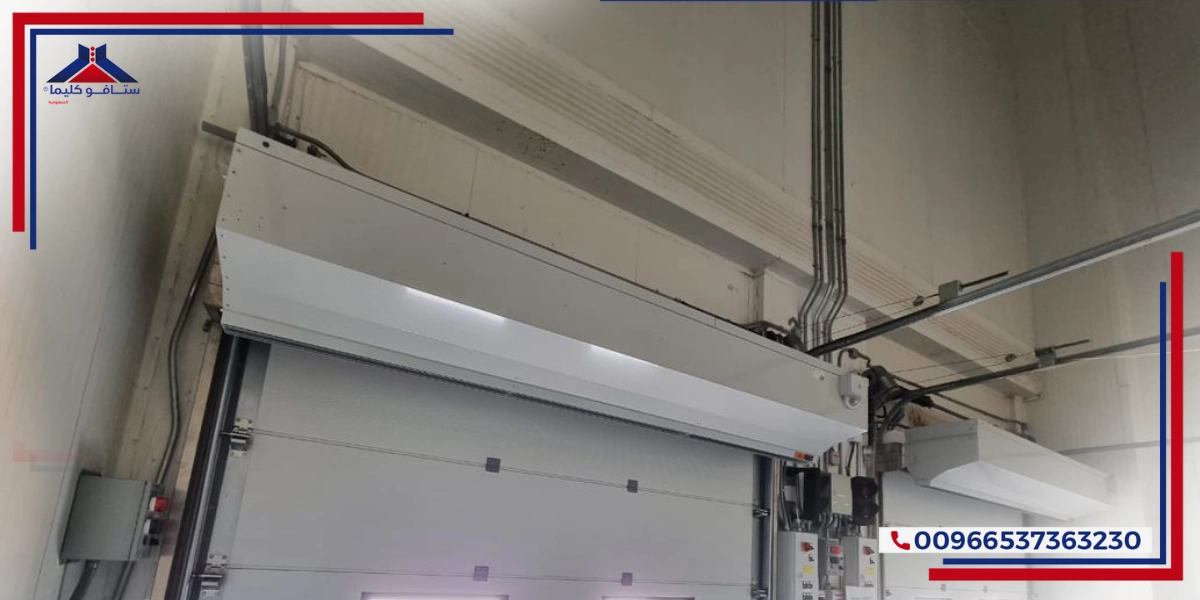
Types of HVAC Systems Comparison Table
HVAC System Type | Best For | Main Advantage | Main Limitation | Best Project Size |
Split System | Homes, small offices, small shops | Low cost and simple installation | Limited zoning and scalability | Small |
Ductless HVAC | Retrofits, villas, small zones | No ductwork and flexible zoning | Higher cost if many zones are needed | Small to medium |
Package Unit | Retail, restaurants, warehouses | All-in-one commercial solution | Limited zoning flexibility | Medium |
VRF System | Hotels, offices, clinics, multi-zone buildings | High zoning flexibility and part-load efficiency | Higher initial cost and specialist design | Medium to large |
VAV System | Offices, hospitals, large commercial buildings | Centralized airflow and zone control | Requires ductwork and complex controls | Large |
Chiller System | Airports, malls, hospitals, industrial plants | High cooling capacity and central cooling | High capital cost and maintenance complexity | Large to very large |
How to Choose the Right Types of HVAC System for your Saudi Facility?
Choosing the right HVAC system should not start with the equipment brand or unit price. It should start with the building’s actual needs.
1. Building Type
A residential villa does not need the same HVAC system as a hospital, hotel, or warehouse.
- Residential buildings often use Split or Ductless systems.
- Retail stores often use Package Units or Split systems.
- Hotels often benefit from VRF or Chiller systems.
- Hospitals may require VAV, Chiller, or advanced central systems.
- Warehouses may use Package Units, industrial ventilation, or specialized cooling systems.
2. Cooling Load
Cooling load means how much cooling the building needs. It depends on:
- Building size
- Number of occupants
- Outdoor temperature
- Sun exposure
- Glass area
- Insulation quality
- Equipment heat
- Lighting heat
- Operating hours
- Door opening frequency
Oversizing should be avoided. ENERGY STAR highlights that oversized rooftop HVAC units can increase energy costs and equipment wear, which makes proper sizing a critical step in HVAC selection.
3. Zoning Requirements
If different areas need different temperatures, zoning becomes important.
- Split systems offer basic room-level control.
- Ductless systems provide good zone control for small spaces.
- VRF systems provide advanced zone control.
- VAV systems provide centralized zone airflow control.
- Chiller systems can serve many zones through AHUs and FCUs.
4. Ventilation and Indoor Air Quality
Cooling alone is not enough. Buildings also need fresh air, filtration, and humidity control.
This is especially important in:
- Hospitals
- Hotels
- Restaurants
- Schools
- Offices
- Clinics
- Warehouses
- Food facilities
Some systems, such as VRF and Ductless HVAC, may need separate ventilation systems because their main function is zone conditioning rather than fresh-air supply.
5. Energy Efficiency
Energy efficiency depends on more than the equipment rating. It also depends on:
- Correct sizing
- Controls
- Maintenance
- Building insulation
- Entrance protection
- Operating schedule
- Air leakage
- Duct design
- Commissioning
The U.S. Department of Energy notes that HVAC systems are a major part of building energy consumption, and high-performance HVAC equipment can produce significant energy and cost savings.
6. Maintenance Capability
Some HVAC systems are simple to maintain, while others require specialist teams.
- Split systems are relatively simple.
- Package Units are accessible but exposed to outdoor conditions.
- VRF systems require trained technicians.
- VAV systems require controls and airflow balancing expertise.
- Chiller systems require plant-level operation and maintenance.
7. Entrance and Door Activity
This is often ignored during HVAC selection. A building with frequent door openings can lose cooled air quickly, especially in hot climates.
Examples include:
- Retail entrances
- Restaurant doors
- Hotel lobbies
- Hospital entrances
- Warehouse loading bays
- Cold storage doors
- Factory entrances
In these cases, HVAC efficiency is not only about the cooling unit. It is also about protecting conditioned air at entrances.
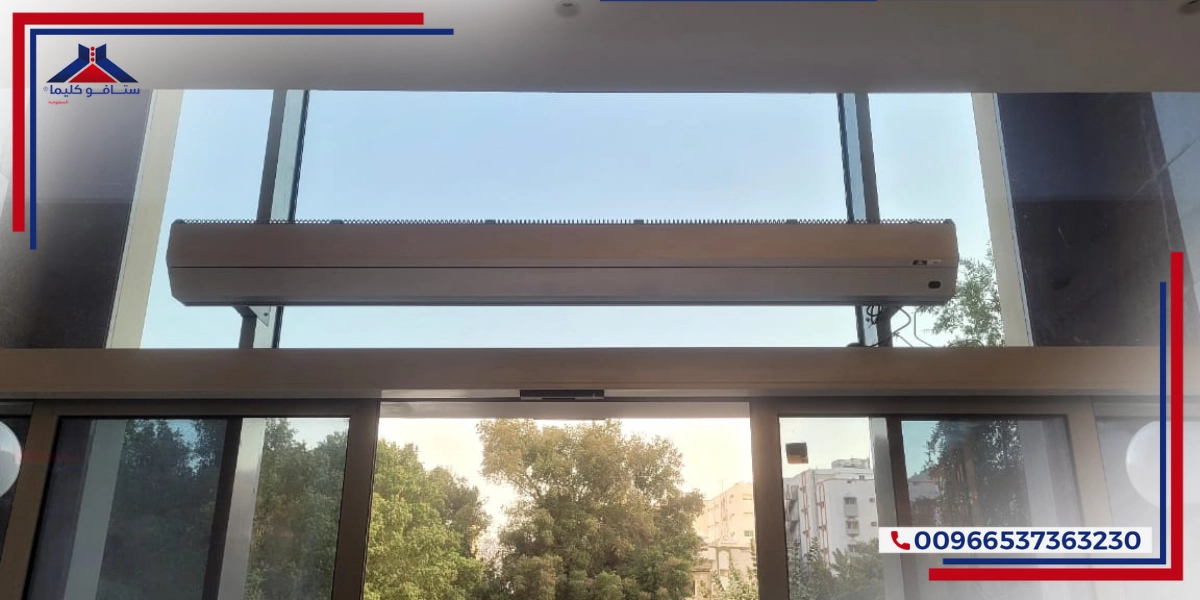
Air Curtains: A Complement to Every HVAC System Type
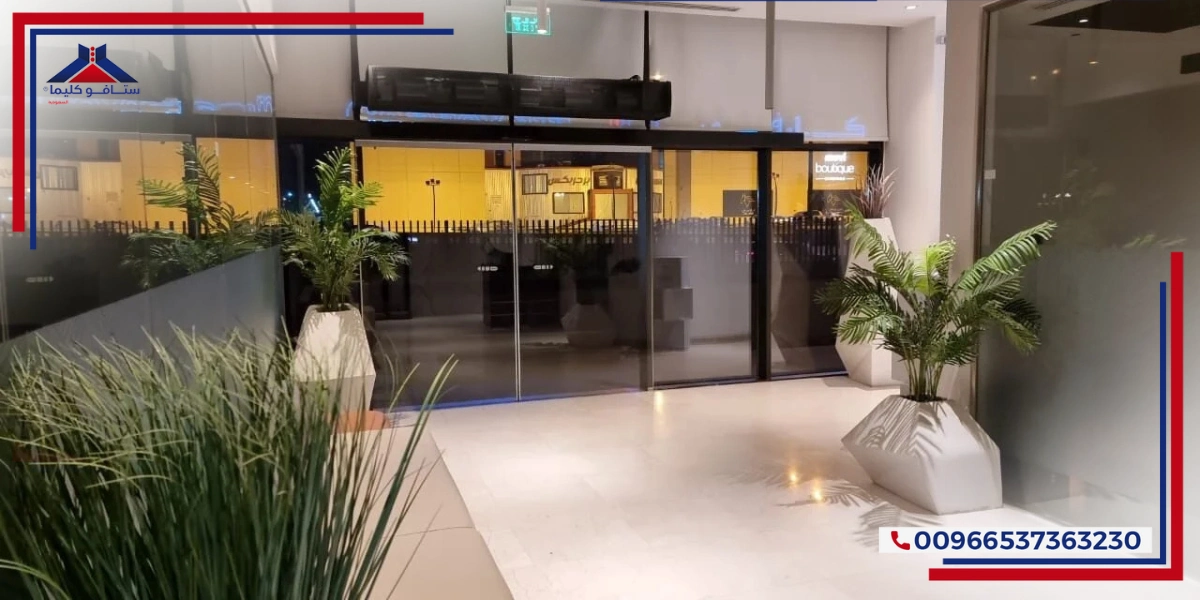
Air curtains do not replace HVAC systems. Instead, they help HVAC systems perform better by protecting one of the weakest points in the building envelope: the entrance.
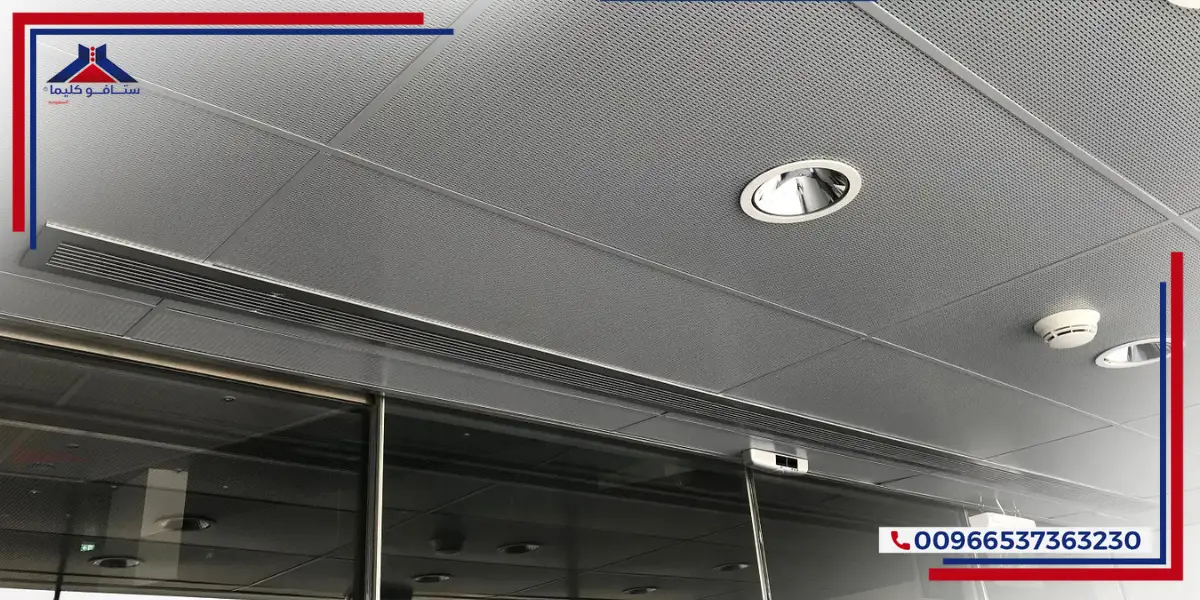
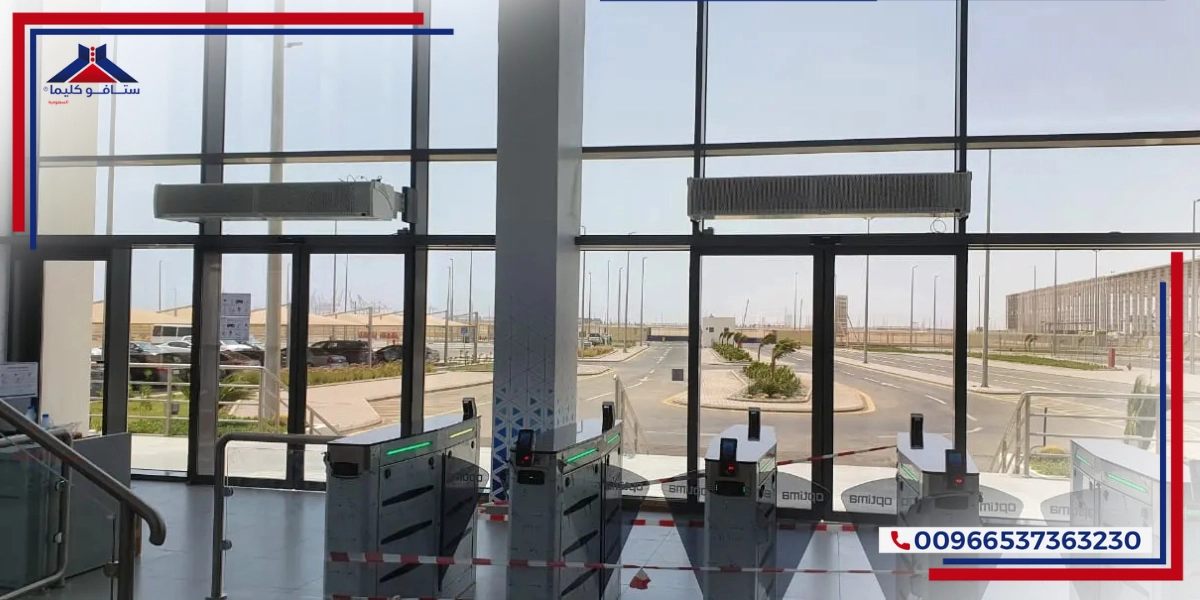
An air curtain creates a controlled stream of air across a doorway or opening. This air barrier helps reduce the movement of outdoor air into the building and conditioned indoor air out of the building.
How Air Curtains Support Different HVAC Systems?
1- With Split Systems
In small shops or offices using Split systems, air curtains can reduce the amount of hot air entering through the main door. This helps the split unit maintain a more stable indoor temperature.
2- With Ductless HVAC
Ductless systems often serve individual zones. If the entrance is exposed, the indoor unit may work harder to compensate for heat gain. Air curtains help protect the cooled zone.
3- With Package Units
Package commercial hvac Units are common in commercial spaces with frequent customer movement. Air curtains help reduce cooling loss at entrances, which can support more stable comfort conditions.
4- With VRF Systems
VRF systems are efficient because they adjust cooling output by zone. Air curtains help protect those zones from sudden heat gain caused by open doors, especially in retail, hospitality, and office buildings.
5- With VAV Systems
VAV systems control airflow by zone. Air curtains help reduce external air disturbance at entrances, allowing the VAV system to manage internal zones more effectively.
6- With Chiller Systems
Chiller systems are used in large buildings where cooling energy is a major operating cost. In malls, hospitals, factories, and logistics facilities, air curtains help reduce entrance-related cooling loss and support the overall performance of the chilled water system.
Stavoklima Saudi Arabia: Air Curtain Solutions That Support HVAC Performance
At Stavoklima Saudi Arabia, we specialize in air curtain solutions that support HVAC efficiency in commercial, industrial, healthcare, hospitality, logistics, and retail environments.
Our role is not to replace HVAC systems. Our role is to help protect their performance. Every time a door opens, cooled indoor air can escape while heat, dust, humidity, insects, and outdoor pollutants enter.
Our air curtains create an engineered air barrier that helps reduce this exchange and supports better indoor comfort.
Why Our Air Curtains Matter for HVAC Projects?
- Helping reduce cooling loss at entrances: Entrances are one of the most common points of energy waste in commercial buildings. Our solutions help protect cooled indoor air.
- Supporting different HVAC system types: Our air curtains can work alongside Split, Ductless, Package, VRF, VAV, and Chiller systems.
- Designing according to the application: A retail entrance, cold storage door, hospital corridor, and factory loading bay do not need the same air curtain. We study the site and recommend the appropriate model.
- Serving Saudi operating conditions: Our solutions are selected for environments exposed to heat, dust, frequent door movement, and heavy commercial or industrial use.
- Improving comfort without blocking movement: Air curtains create an invisible barrier, allowing people, vehicles, carts, and goods to move freely.
Looking to improve HVAC efficiency at your building entrance? Contact Stavoklima Saudi Arabia and let our team recommend the right air curtain solution for your project.
Stavoklima Air Curtains Projects in Saudi Arabia
At Stavoklima, our projects show how air curtains can support different HVAC system types in real buildings, not just in theory.
From government facilities and warehouses to food factories and commercial spaces, each project has different entrance challenges, cooling requirements, and operational conditions.
The following examples highlight how we help buildings reduce cooling loss, limit hot air and dust infiltration, improve indoor comfort, and protect HVAC performance at high-traffic entrances.
1. Ministry of Municipal, Rural Affairs and Housing
At the Ministry of Municipal, Rural Affairs and Housing headquarters in Riyadh, the building had more than 40 entrances, creating a challenge with dust, insects, hot air, and comfort near door areas during peak movement.
Stavoklima selected Li0 air curtains for staff and main entrances and Li Pico air curtains for balcony doors, inter-building doors, and other access points.
The project focused on improving indoor comfort, reducing dust and insect entry, and supporting air conditioning performance around high-use doors.
2. Advanced Warehousing Company
Advanced Warehousing Company operates large storage sites in Saudi Arabia, including Riyadh and Jeddah, with frozen storage spaces and large doors used for product movement.
Stavoklima installed industrial air curtains to help protect the warehouse environment. According to the project page, the customer reported more than 15% energy savings after installation, along with better temperature stability for stored products.
3. Seara Factory
At Seara Factory Project, Stavoklima used Axi Horizontal air curtains for an industrial environment where climate separation, dust reduction, and product protection were important.
The project highlighted the role of air curtains in maintaining indoor air quality, reducing pollutants, supporting worker comfort, and creating an air barrier without obstructing loading carts or movement.
The Axi Horizontal model is described as suitable for industrial settings, warehouses, and cold rooms, with coverage for door heights up to 8 meters.
From government buildings and warehouses to food factories and commercial facilities, Stavoklima Saudi Arabia helps businesses protect HVAC performance at entrances. Contact our team to choose the right air curtain for your building type.
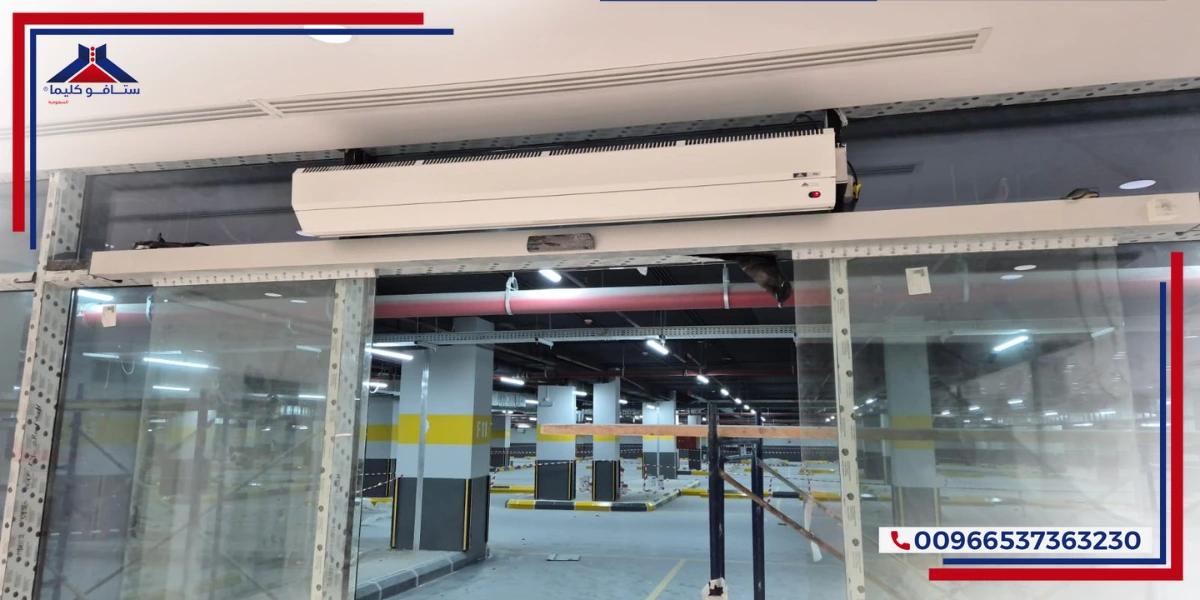
Final Recommendation: Which HVAC System Should You Choose?
The best HVAC system depends on your building type, size, cooling load, budget, and operational needs.
- Choose Split systems for small residential hvac projects and light commercial spaces.
- Choose Ductless HVAC when ductwork is not practical.
- Choose Package Units for medium commercial spaces and rooftop applications.
- Choose VRF systems for multi-zone buildings that need flexible control.
- Choose VAV systems for large commercial buildings with central air distribution.
- Choose Chiller systems for large-scale buildings with high cooling demand.
But no matter which HVAC system you choose, efficiency also depends on how well the building protects conditioned air.
In Saudi Arabia’s hot climate, entrances can become major sources of cooling loss. That is why air curtains are a practical complement to HVAC systems, especially in high-traffic buildings.
A well-selected HVAC system controls the indoor environment. A well-selected air curtain helps protect that environment from the entrance.
References
1-Description 2024 ASHRAE Handbook—HVAC Systems and Equipment
2-Light Commercial Heating & Cooling | ENERGY STAR
3-Variable Refrigerant Flow Air Conditioners and Heat Pumps
4-Trane Intelligent VAV Systems
5-Fundamentals of Design and Control of Central Chilled-Water Plants
6-Federal Facilities Are Leveraging Energy and Water Saving Heating and Cooling Technologies
FAQs about Types of HVAC Systems
1-Which HVAC system is most common in Saudi Arabia?
Split systems are very common in residential buildings and small offices, while Package Units, VRF systems, VAV systems, and Chiller systems are commonly used in commercial, hospitality, healthcare, and industrial projects depending on building size and cooling demand.
2-What is the difference between a Split system and a Package Unit?
- A Split system has separate indoor and outdoor units.
- A Package Unit combines the main heating and cooling components into one outdoor or rooftop unit.
Split systems are often used for smaller spaces, while Package Units are common in light commercial buildings.
3-Is ductless HVAC suitable for hot climates?
Yes, ductless HVAC can be suitable for hot climates when properly sized. It is especially useful for small zones, villas, renovated spaces, and areas without ductwork.
For larger buildings, it may need to be combined with proper ventilation and entrance protection.
4-What is the difference between VRF and VAV?
- VRF controls refrigerant flow to multiple indoor units, making it suitable for buildings that need flexible zone control.
- VAV controls the volume of air supplied through ducts to different zones, making it suitable for large buildings with central air handling.
5-Which HVAC system is best for large buildings?
Chiller systems, VAV systems, and VRF systems are often used in large buildings. The best option depends on the project’s size, zoning needs, ventilation requirements, operating hours, and maintenance strategy.
6-Can an air curtain work with any HVAC type?
Yes. Air curtains can support almost any HVAC system type because they work at the entrance, not inside the main HVAC equipment.
They help reduce cooling loss, hot air infiltration, dust, insects, and humidity entering through open doors.
7-Do air curtains reduce HVAC energy consumption?
Air curtains can help reduce the load caused by air exchange at entrances. Their actual impact depends on door size, traffic frequency, air curtain selection, installation quality, building pressure, and HVAC design.