


In large commercial buildings, HVAC performance is not only about cooling the space. It is also about delivering the right amount of conditioned air to the right zone at the right time. This is exactly where VAV HVAC systems become valuable.
VAV is an air distribution strategy that adjusts airflow according to the cooling or heating demand of each zone. Instead of supplying the same amount of air all the time, a VAV system reduces or increases airflow based on actual space requirements.
This makes VAV one of the most important HVAC solutions for offices, malls, hospitals, universities, airports, hotels, and large commercial buildings where different areas have different occupancy levels, schedules, and cooling loads.
In this guide, we explain what is VAV in HVAC, the VAV full form in HVAC, how VAV systems work, the difference between VAV and CAV in HVAC, how VCD in HVAC relates to airflow control, and how air curtains can help improve VAV zone performance at building entrances.
Table of Contents
ToggleWhat Is a VAV System?
A VAV system is an HVAC air distribution system that controls the amount of air supplied to a space based on demand. The main idea is simple: when a zone needs more cooling, the system increases airflow. When the zone needs less cooling, the system reduces airflow.
This is different from older constant-volume systems that continue delivering the same airflow even when the zone does not need it.
In a typical VAV in HVAC system, conditioned air is supplied from an Air Handling Unit, or AHU, through ductwork to multiple zones. Each zone has a VAV box that controls airflow based on signals from a thermostat or zone controller.
A VAV system usually includes:
- Air Handling Unit, AHU
- Supply fan, often with a variable frequency drive
- Ductwork
- VAV boxes
- Zone thermostats
- Dampers
- Airflow sensors
- Controllers
- Sometimes reheat coils
- Building Management System integration
The U.S. Department of Energy describes VAV systems as systems that modulate air volume according to zone load, helping reduce fan energy use compared with constant-air-volume systems.
VAV Full Form in HVAC
The VAV full form in HVAC is Variable Air Volume. This means the system varies the volume of air delivered to different building zones depending on demand.
The temperature of supplied air may remain relatively constant, while the airflow changes.
In simple terms:
- VAV = Variable Air Volume
- It controls airflow quantity.
- It is commonly used in large commercial HVAC systems.
- It helps reduce energy waste during part-load conditions.
- It improves zone-level comfort when properly designed and controlled.
This makes VAV in HVAC especially useful in buildings where occupancy and cooling demand change throughout the day.
How VAV Works Step by Step?
A VAV in HVAC system works through a controlled relationship between the AHU, ductwork, VAV boxes, thermostats, and fan controls.
1. The AHU Conditions the Air
The Air Handling Unit cools, filters, and supplies air into the duct system. In many VAV systems, the AHU supplies air at a relatively constant temperature.
2. Air Moves Through the Ductwork
The supply fan pushes conditioned air through the duct network toward different zones in the building.
3. The Thermostat Reads Zone Temperature
Each zone has a thermostat or sensor that measures the current indoor temperature and compares it to the setpoint.
4. The VAV Box Adjusts Airflow
If the zone needs more cooling, the VAV box damper opens to allow more air into the space. If the zone needs less cooling, the damper closes partially to reduce airflow.
5. The Fan Responds to Demand
As multiple VAV boxes reduce airflow, the system can reduce fan speed using a variable frequency drive. This is one of the main reasons VAV systems save energy.
MEP Academy explains that VAV systems reduce airflow at partial load by reducing fan speed, and that this reduction in fan speed is a key reason VAV systems can be more energy efficient than constant-volume systems.
6. The System Maintains Comfort by Zone
Each zone receives airflow based on its own demand. This helps reduce overcooling in some areas and undercooling in others.
VAV Box: Function and Installation
A VAV box is the device that makes Variable Air Volume control possible at the zone level. It is usually installed in the ductwork before the air reaches a specific room or zone.
The VAV box controls airflow through an internal damper. Some VAV boxes also include reheat coils, which are used when a zone needs warmer air or when air must be reheated after airflow reduction.
Main Functions of a VAV Box
- Measures airflow entering the zone.
- Adjusts the damper position.
- Responds to thermostat signals.
- Controls minimum and maximum airflow.
- Helps maintain zone comfort.
- Can include reheat for temperature control.
- Communicates with the building control system.
Where Is a VAV Box Installed?
A VAV box is usually installed above the ceiling or within accessible duct spaces. It should be placed where technicians can inspect, balance, and maintain it.
Good installation matters because poor access, incorrect airflow settings, or bad sensor calibration can reduce performance.
VAV vs CAV vs VCD Explained
To understand VAV in HVAC, it is important to compare it with CAV in HVAC and VCD in HVAC.
What Is CAV in HVAC?
CAV in HVAC stands for Constant Air Volume.
A CAV system supplies a constant amount of air to a space. Instead of changing airflow, it usually changes air temperature or cycles equipment to meet the cooling or heating demand.
How CAV Works
In a CAV system:
- Airflow remains constant.
- The system supplies the same air volume most of the time.
- Temperature control is achieved by changing supply air temperature or cycling equipment.
- The design is simpler than VAV.
- Fan energy use can be higher because airflow does not reduce during low-load periods.
Best Uses for CAV Systems
CAV systems may be suitable for:
- Small buildings
- Single-zone spaces
- Areas with stable loads
- Simple commercial applications
- Spaces requiring constant ventilation rates
Limitations of CAV
CAV systems are less flexible in multi-zone buildings. If one area needs more cooling and another area needs less, a constant-air system may waste energy or create comfort problems.
VAV and CAV in HVAC: Key Differences
The main difference between VAV and CAV in HVAC is airflow control.
Comparison Point | VAV HVAC | CAV HVAC |
Full form | Variable Air Volume | Constant Air Volume |
Airflow | Changes based on demand | Stays constant |
Energy efficiency | Higher in part-load conditions | Lower in part-load conditions |
Best for | Multi-zone buildings | Single-zone or simple spaces |
Comfort control | Better zone control | Limited zone flexibility |
System complexity | More complex | Simpler |
Initial cost | Usually higher | Usually lower |
Fan energy | Can reduce with lower airflow | Usually remains higher |
VAV systems are generally more suitable for large buildings with changing loads, while CAV systems may still be practical in smaller or simpler spaces.
What Is VCD in HVAC?
VCD in HVAC stands for Volume Control Damper.
A VCD is a damper used inside ductwork to regulate or balance airflow. It can be manual or motorized, depending on the system design.
How VCD Relates to VAV
A VAV box uses a controlled damper to vary airflow automatically based on zone demand. A VCD, on the other hand, is often used for manual balancing or airflow adjustment in duct branches.
In simple terms:
- VAV is a complete airflow control system.
- VAV box is a zone-level control device.
- VCD is a duct damper used to control or balance airflow.
- CAV is a system that keeps airflow constant.
VCD vs VAV Box
Feature | VCD in HVAC | VAV Box |
Main purpose | Air balancing or flow control | Automatic zone airflow control |
Control method | Manual or motorized | Automatic with controller |
Connected to thermostat | Usually no | Yes |
Used for zoning | Limited | Yes |
System role | Duct adjustment component | Core part of VAV system |
A VCD is useful, but it does not provide the same smart zone control as a VAV box.
Why VAV in HVAC Saves Energy?
The biggest energy-saving advantage of VAV comes from reducing airflow when full cooling is not required.
In many buildings, peak cooling load happens only during certain hours. For the rest of the day, zones may need less cooling because of lower occupancy, reduced solar heat, or changing internal loads.
A VAV system responds to this by reducing airflow. When airflow is reduced, the supply fan can slow down. Since fan power is strongly related to fan speed, reducing fan speed can significantly reduce energy use.
Studies and technical resources commonly report meaningful savings when VAV replaces or improves constant-volume operation.
REHVA reports that VAV can reduce fan energy use by up to 30% compared with conventional CAV systems in certain applications, while PNNL also identifies large office buildings as a key building type where VAV in HVAC systems are widely used and where advanced controls can deliver savings.
Main Energy Benefits of VAV
- Reduced fan energy during part-load conditions.
- Less overcooling in low-demand zones.
- Better match between airflow and occupancy.
- Improved zone control.
- Better compatibility with building automation systems.
- Potential for demand-controlled ventilation strategies.
- Lower operating cost in large multi-zone buildings.
However, actual savings depend on system design, controls, commissioning, building load profile, climate, maintenance, and operating schedule.
Variable Air Volume in Large Commercial Buildings
VAV systems are especially common in large commercial buildings because these buildings rarely have one uniform load across all areas.
For example:
- A south-facing office zone may need more cooling during afternoon sun.
- Meeting rooms may need high airflow only when occupied.
- Internal zones may need cooling even when perimeter zones need less.
- Retail areas may experience changing customer traffic.
- Hospital zones may have different air and comfort requirements.
- Hotel public areas may operate differently from back-of-house zones.
This is why VAV in HVAC is usually more effective than a simple constant-volume approach in large buildings.
Common Applications of VAV
- Office buildings
- Malls
- Hospitals
- Universities
- Airports
- Hotels
- Government buildings
- Mixed-use developments
- Large commercial facilities
ASHRAE training materials cover both constant-volume and variable-air-volume recirculating systems for single-zone and multi-zone spaces, showing that VAV is a recognized design approach in energy-efficient HVAC system design.
Is VAV Suitable for Saudi Arabia?
Yes, VAV can be suitable for large commercial buildings in Saudi Arabia, especially where there are multiple zones, long operating hours, and a need to reduce energy waste.
Saudi Arabia’s hot climate places heavy demand on cooling systems. In this environment, HVAC efficiency depends on more than equipment capacity. It also depends on proper airflow control, building envelope performance, entrance protection, commissioning, and maintenance.
The Saudi Building Code’s SBC 601 for nonresidential buildings defines minimum requirements for energy efficiency in building design and aims to support energy conservation through design requirements.
This makes efficient HVAC strategies such as VAV, proper controls, and air leakage reduction especially relevant for commercial projects.
When VAV Makes Sense in Saudi Projects?
VAV is especially useful when the building has:
- Multiple zones
- Different occupancy schedules
- Large floor areas
- Long daily operating hours
- Central air handling systems
- Building management system integration
- Need for better comfort control
- Need to reduce fan energy use
When VAV May Not Be the Best Option?
VAV may not be ideal for:
- Very small buildings
- Simple single-zone spaces
- Projects with limited duct space
- Buildings without proper controls
- Facilities where constant airflow is required for process or safety reasons
- Projects with weak maintenance capability
Air Curtains at VAV Zone Entrances
VAV systems control airflow inside building zones, but they can still be affected by what happens at entrances.
In Saudi Arabia, building entrances are exposed to hot outdoor air, dust, humidity, and frequent door movement. Every time a door opens, outdoor air can enter the building while cooled indoor air escapes. This creates sudden load changes that may affect comfort and force the HVAC system to respond more aggressively.
This is where air curtains can support VAV zone performance.
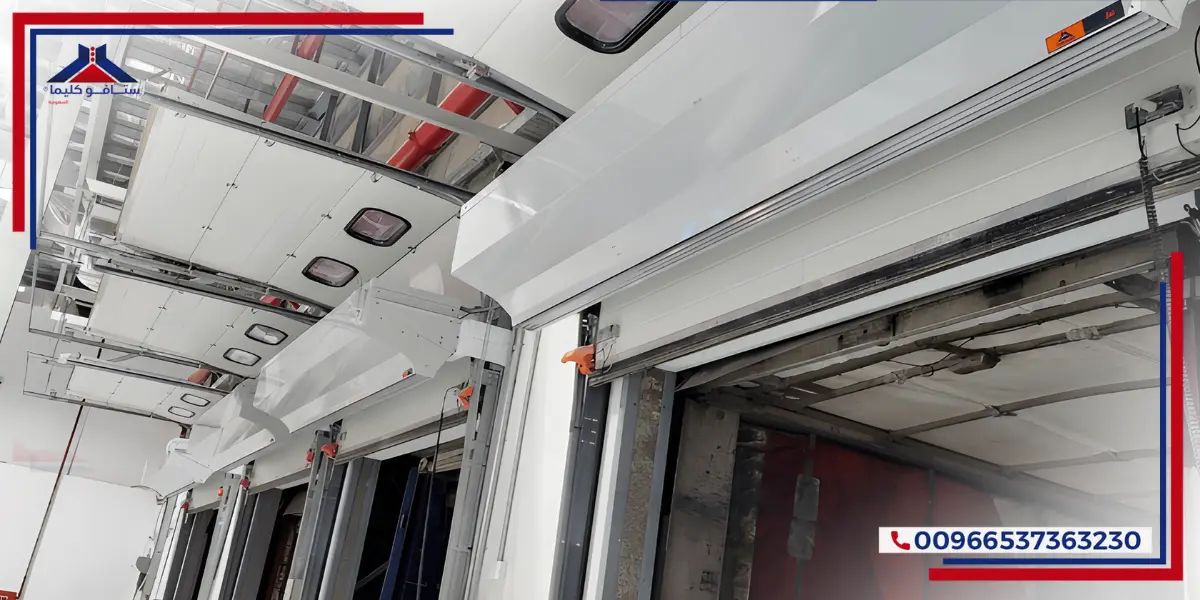
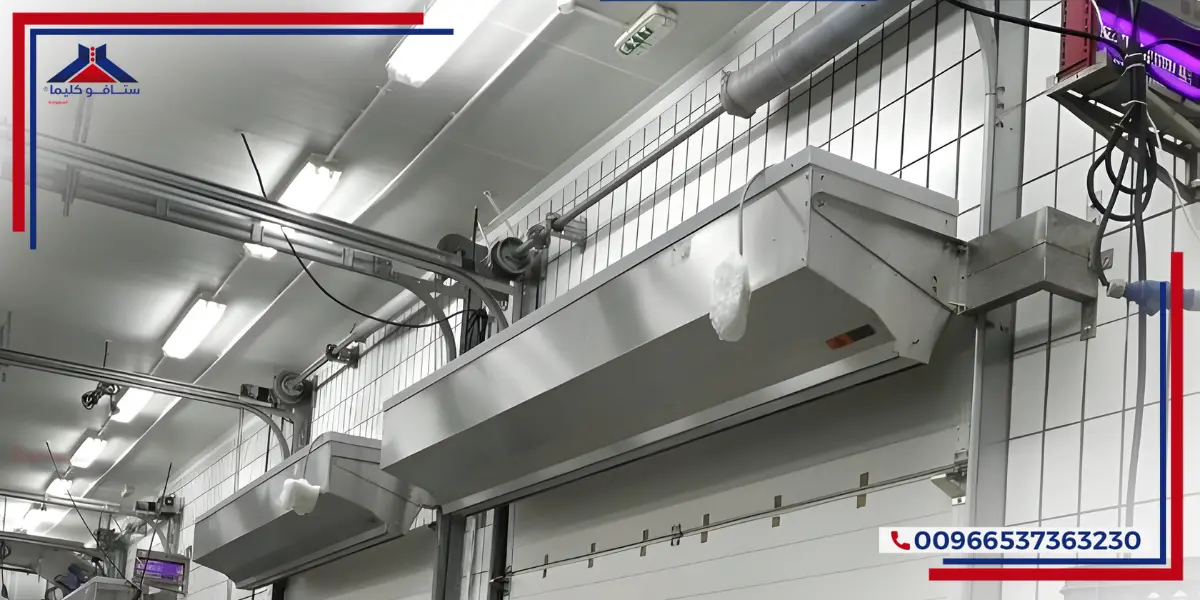
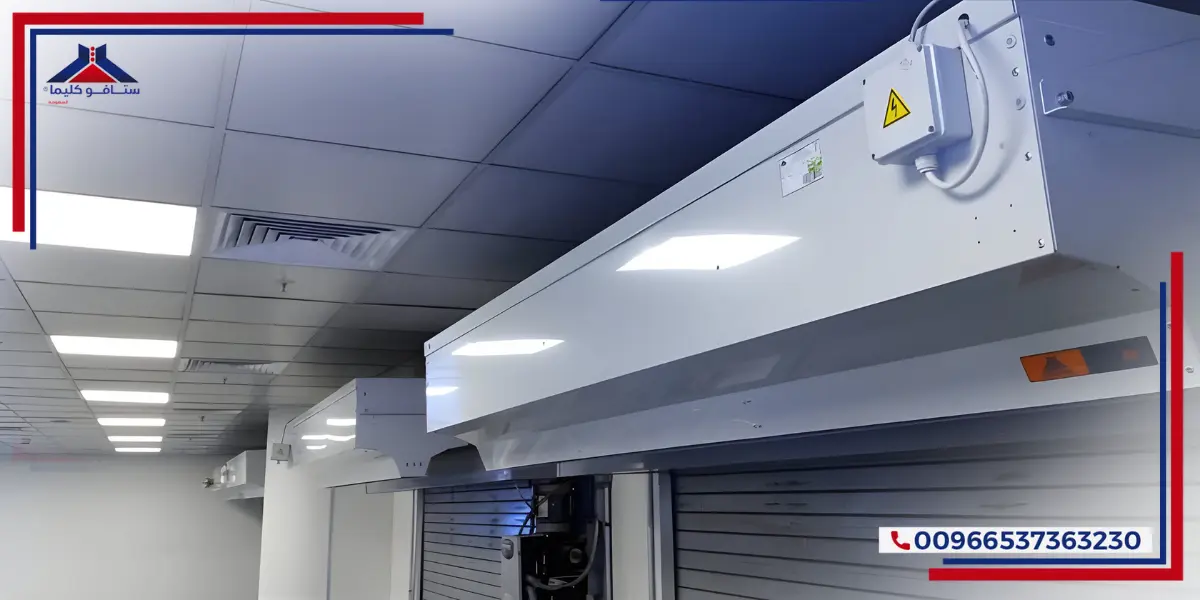
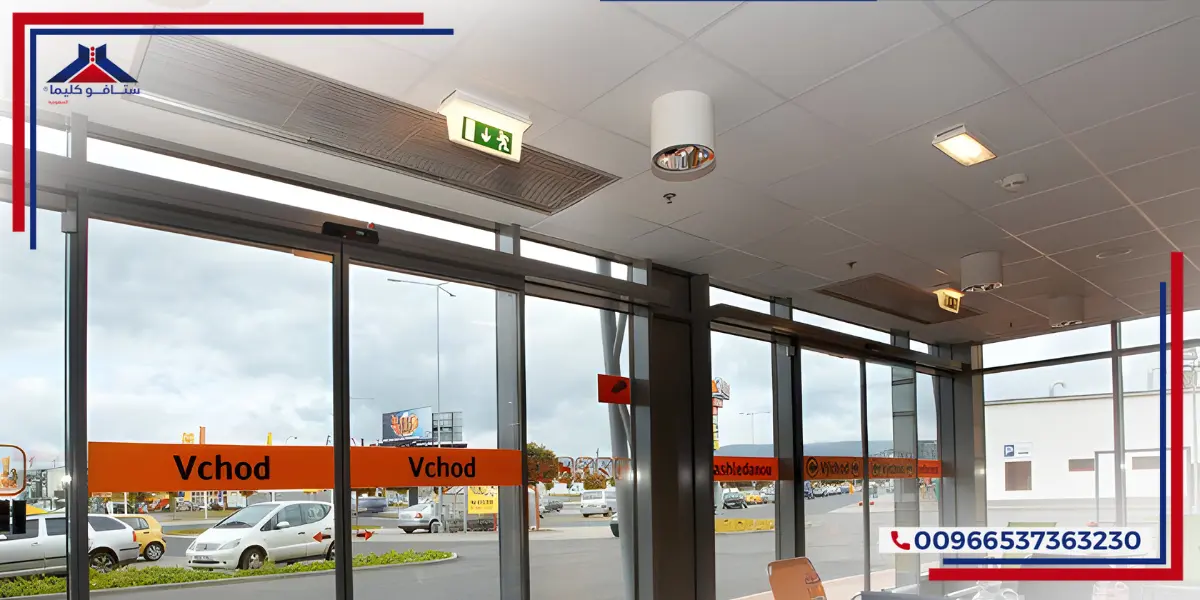
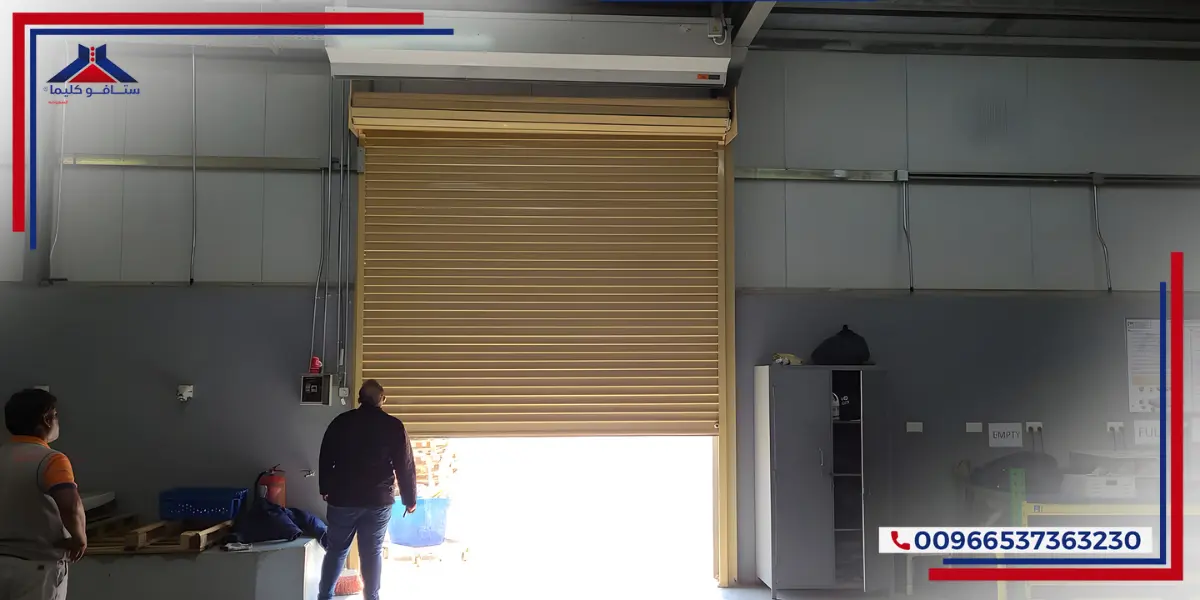
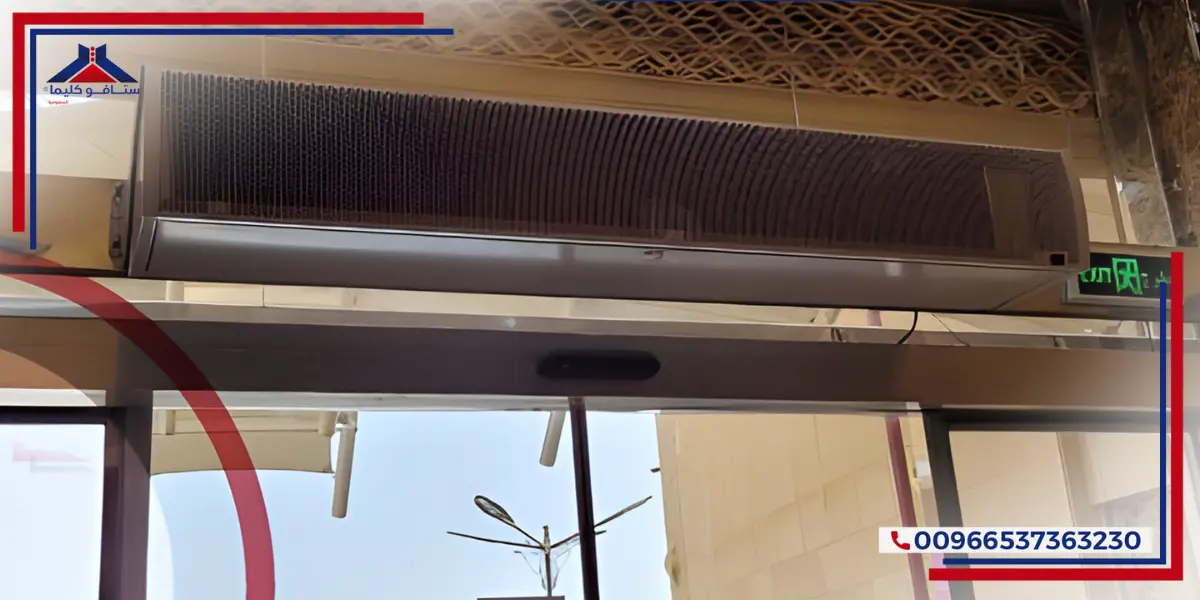
An air curtain creates a controlled stream of air across a doorway. This air barrier helps reduce the exchange between indoor and outdoor air without blocking the movement of people, carts, goods, or vehicles.
How Air Curtains Improve VAV Zone Efficiency?
- They reduce hot air infiltration: Less hot air entering the space means the VAV zone does not experience sudden load increases as often.
- They help protect conditioned air: Air curtains reduce the loss of cooled air at entrances, especially in high-traffic commercial buildings.
- They support stable zone control: When the entrance is better protected, the VAV box and thermostat can respond more smoothly to actual internal load instead of constant door-related disturbances.
- They help reduce dust and humidity entry: This is important in Saudi Arabia, where outdoor dust and humidity can affect comfort and indoor air quality.
- They improve comfort near entrances: Lobby areas, reception zones, retail entrances, and hospital access points can become more comfortable when hot air entry is reduced.
Air curtains do not replace VAV in HVAC systems. They protect the zone boundary so the VAV system can work under more stable conditions.
Stavoklima Saudi Arabia: Air Curtains That Support Variable Air Volume Performance
At Stavoklima Saudi Arabia, we specialize in air curtain solutions that help commercial, industrial, hospitality, healthcare, and public buildings protect HVAC performance at entrances.
In buildings using VAV HVAC, entrance conditions can directly affect zone loads. If hot air, dust, humidity, or outdoor pollutants enter frequently, the VAV system may need to increase airflow to restore comfort.
Our role is to help reduce this disturbance by creating an engineered air barrier at the entrance.
How We Support Variable Air Volume HVAC Projects?
- We protect high-traffic entrances: We help reduce cooled air loss and hot air infiltration at doors that open frequently.
- We support better zone stability: By reducing external air disturbance, our air curtains help VAV zones maintain more stable conditions.
- We design according to entrance type: A hotel lobby, office entrance, hospital corridor, warehouse loading door, and commercial mall entrance each need different air curtain specifications.
- We support indoor air quality: Our solutions help reduce the entry of dust, insects, smoke, fumes, and outdoor contaminants.
- We improve comfort without blocking movement: Air curtains create an invisible barrier, allowing people and goods to move freely.
If your building uses VAV HVAC or any central air distribution system, contact Stavoklima Saudi Arabia to choose the right air curtain solution for your entrances and improve zone performance.
Stavoklima Air Curtains Projects in Saudi Arabia
At Stavoklima Saudi Arabia, our projects show how air curtains can help protect HVAC performance in different real-world applications.
1. Riyadh Digital City
In Riyadh Digital City Project, Stavoklima installed Li Pico air curtains to improve air quality, reduce energy consumption, and support a cleaner and more comfortable working environment.
The project also focused on matching the air curtain design with the building’s interior appearance, which is important in modern office and commercial environments.
2. The Ritz-Carlton Hotel, Jeddah
At The Ritz-Carlton Hotel in Jeddah, Stavoklima worked with the hotel’s engineering team to study the entrance conditions and select a suitable air curtain solution.
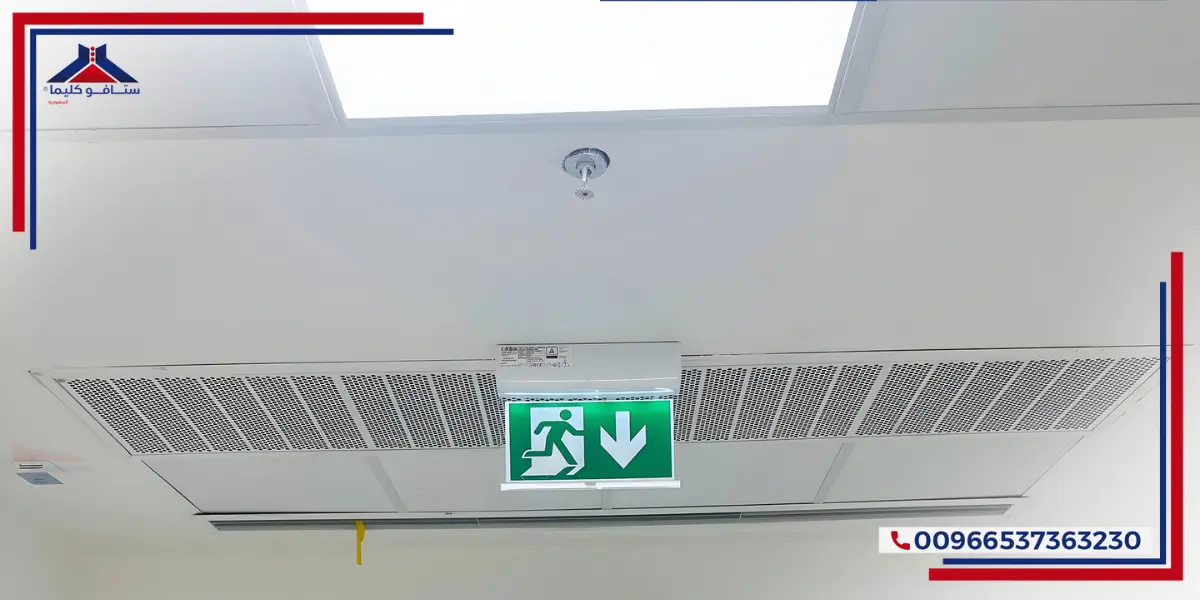
One of the challenges was limited space between the main door and ceiling, so the team selected a concealed air curtain solution adapted to the entrance design and the hotel’s aesthetic requirements.
3. Second Mills Company
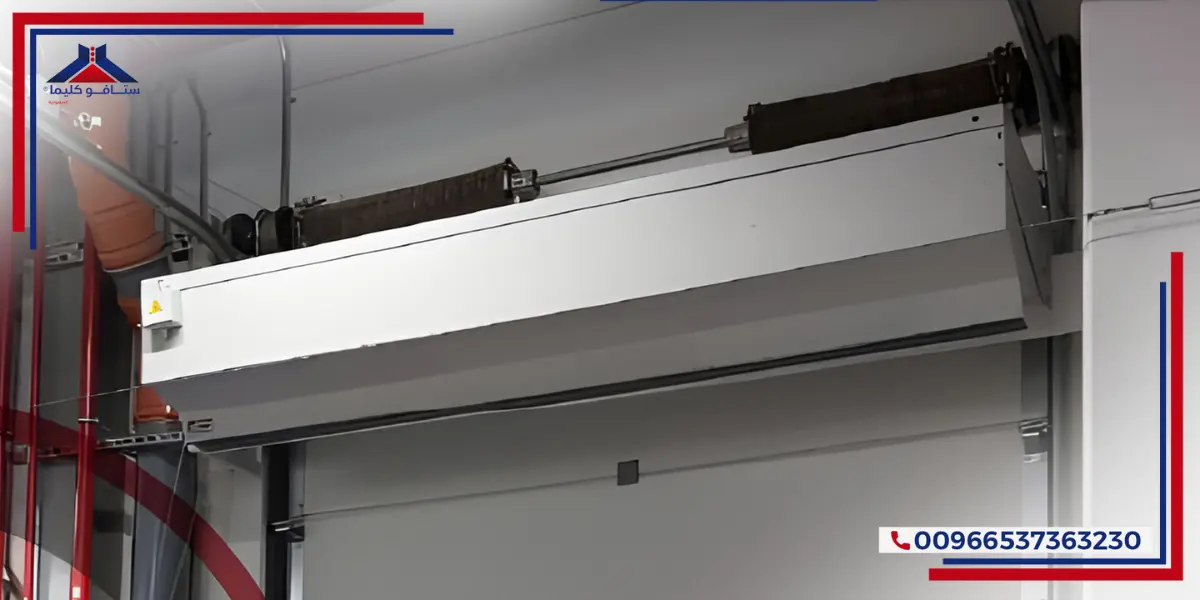
At the Second Mills Company in Saudi Arabia, Stavoklima supplied industrial air curtain solutions for production, packaging, and storage environments where dust, flour particles, insects, and frequent door movement created air quality and product protection challenges.
The selected AXI air curtain helped support air separation and protect the internal environment from external contaminants.
What These Projects Show?
- Air curtains can support office, hospitality, and industrial HVAC environments.
- Entrance protection is important for both comfort and operational performance.
- Different buildings require different air curtain models and installation approaches.
- Air curtains are especially useful where airflow stability, cleanliness, and energy efficiency matter.
From hotels and offices to industrial facilities, Stavoklima Saudi Arabia helps protect HVAC performance at the entrance. Contact our team for a free consultation and model recommendation.
Conclusions
VAV HVAC systems are one of the most effective solutions for large buildings that need flexible airflow control, better comfort, and reduced energy use. Unlike CAV systems, VAV systems adjust air volume based on zone demand, which allows them to reduce fan energy during part-load conditions.
Understanding VAV in HVAC, the difference between VAV and CAV in HVAC, and the role of VCD in HVAC helps consultants, contractors, facility managers, and building owners make better design and operation decisions.
But VAV performance does not depend only on ducts, dampers, fans, and controls. It also depends on how well the building protects its conditioned zones. In Saudi Arabia’s hot climate, entrances can become major sources of cooling loss and load disturbance.
That is why air curtains are a practical complement to VAV systems. They help reduce air exchange at entrances, protect cooled indoor air, reduce dust and humidity infiltration, and support more stable zone performance.
A well-designed VAV system controls airflow inside the building. A well-selected air curtain helps protect that control from the entrance.
References
1-Energy Savings for Occupancy-Based Control (OBC) of Variable-Air-Volume (VAV) Systems
2-How a Variable Air Volume VAV System Works?
3-Development and Evaluation of a Multi-Zone VAV HVAC System with Demand
4-V in HVAC - Energy Efficient HVAC Systems Design
5-The Benefits of Using VAV Systems
6-VAV vs Constant Volume Systems
FAQs about Variable Air Volume (VAV) in HVAC Systems
1-What is the difference between VAV and CAV?
The main difference between VAV and CAV is airflow control:
- VAV stands for Variable Air Volume and changes airflow based on zone demand.
- CAV stands for Constant Air Volume and supplies a fixed amount of air.
VAV is usually more efficient for large multi-zone buildings, while CAV can be suitable for simpler or single-zone spaces.
2-What is VAV in HVAC?
VAV in HVAC means Variable Air Volume. It is an HVAC system that adjusts the amount of air supplied to each zone based on cooling or heating demand. This helps improve comfort and reduce energy use in large commercial buildings.
3-What is the VAV full form in HVAC?
The VAV full form in HVAC is Variable Air Volume. It refers to a system that varies airflow to match the needs of each building zone.
4-What is a VCD and how does it relate to VAV?
VCD in HVAC means Volume Control Damper. It is used to regulate or balance airflow in ducts. A VAV box also uses a damper, but it is automatically controlled by a thermostat or controller to adjust airflow based on zone demand.
5-Is VAV suitable for small buildings?
VAV is usually more suitable for medium and large buildings with multiple zones. Small single-zone buildings may not need the complexity or cost of a VAV system unless they have special efficiency or control requirements.
6-How do air curtains improve VAV zone efficiency?
Air curtains improve VAV zone efficiency by reducing hot air infiltration, cooled air loss, dust, and humidity at entrances. This helps the VAV system maintain more stable zone conditions and reduces sudden load changes caused by frequent door openings.