


In Saudi Arabia’s hot climate, building comfort depends on more than powerful air conditioning. Modern buildings need HVAC systems that manage cooling, ventilation, indoor air quality, and energy efficiency together.
As Saudi Arabia moves toward smarter and more sustainable buildings under Vision 2030, HVAC efficiency is becoming more important than ever.
One key challenge is protecting cooled indoor air at entrances, where heat, dust, and humidity can enter every time doors open. This is where air curtains support HVAC performance by creating an invisible barrier that helps reduce cooling loss and improve indoor comfort.
In this article, Stavoklima explains to you what HVAC means, why it matters, and how air curtains can help buildings achieve better efficiency from the entrance.
Table of Contents
ToggleWhat is an HVAC System?
An HVAC system is the complete building system responsible for controlling indoor comfort through Heating, Ventilation, and Air Conditioning.
In simple terms, it manages the temperature, airflow, humidity, and air quality inside a space to keep it comfortable, healthy, and energy efficient.
Unlike a basic air conditioner that mainly focuses on cooling, an HVAC system combines several functions together, including cooling, fresh air supply, air filtration, ventilation, and sometimes heating.
In hot climates such as Saudi Arabia, HVAC systems are especially important because they help homes, offices, malls, hotels, hospitals, and commercial buildings maintain stable indoor temperatures while supporting better energy performance and indoor air quality.
The 4 Core Components of HVAC
Although HVAC systems can vary depending on building size and application, most systems include four core components.
1. Heating System
The heating part of HVAC may include furnaces, boilers, heat pumps, or electric heating units. Its job is to provide warmth when the indoor temperature is lower than the comfort level.
In Saudi Arabia, heating is not usually the main concern, but it can still be required in northern areas, high-altitude regions, residential buildings, healthcare facilities, and hospitality projects.
2. Ventilation System
Ventilation is one of the most important parts of HVAC because it directly affects indoor air quality. A good ventilation system helps:
- Bring fresh air into the building.
- Remove stale indoor air.
- Reduce odors and pollutants.
- Control humidity.
- Support healthier indoor environments.
In commercial buildings, proper ventilation is especially important because many people share the same indoor space for long hours.
3. Air Conditioning System
Air conditioning is the cooling part of HVAC. It removes heat from indoor air and helps maintain a comfortable temperature.
In Saudi Arabia, air conditioning is not a luxury. It is a necessity for homes, offices, retail stores, restaurants, factories, warehouses, hotels, airports, schools, and hospitals.
Because cooling demand is high, choosing the right HVAC system can have a major impact on electricity consumption and operating costs.
4. Controls and Thermostats
Modern HVAC systems rely on controls, sensors, thermostats, and automation to manage performance. These controls help adjust temperature, airflow, operating schedules, and energy use.
In smart buildings, HVAC controls can be connected to building management systems to improve efficiency, comfort, and maintenance planning.
HVAC vs Traditional Air Conditioning
Many people think HVAC and air conditioning are the same thing, but they are not.
Air conditioning is only one part of HVAC. It focuses mainly on cooling indoor spaces. HVAC is a broader system that includes cooling, ventilation, heating, air distribution, filtration, humidity control, and system controls.
HVAC Includes:
- Cooling
- Heating
- Ventilation
- Air filtration
- Humidity control
- Air distribution
- Smart controls
- Energy management
Traditional AC Usually Focuses On:
- Cooling the indoor space
- Basic temperature control
- Limited ventilation, depending on the system type
For small rooms or basic residential use, a traditional AC unit may be enough. But for larger buildings, commercial spaces, industrial facilities, healthcare environments, hotels, and malls, a complete HVAC approach is usually more effective.
Why Is HVAC Critical in Saudi Arabia?
Saudi Arabia’s climate makes HVAC one of the most important building systems. High outdoor temperatures increase the need for continuous cooling, especially in cities such as Riyadh, Jeddah, Dammam, Makkah, Madinah, Khobar, and other fast-growing urban areas.
The Saudi HVAC market is expected to reach USD 3.47 billion in 2025 and grow to USD 4.63 billion by 2030, according to Mordor Intelligence.
This growth is closely connected to the increasing demand for efficient cooling systems, smart buildings, and complementary solutions such as air curtains that help reduce energy loss at building entrances.
1. Extreme Heat Requires Reliable Cooling
During long hot seasons, buildings need cooling systems that can operate efficiently and consistently. Poor HVAC design can lead to uncomfortable indoor conditions, high energy bills, and frequent maintenance issues.
2. Energy Consumption Is a Major Concern
Cooling can represent a large part of building electricity consumption in hot climates. That is why energy-efficient HVAC design is essential for reducing operating costs.
Saudi Arabia also has dedicated national efforts around energy efficiency through the Saudi Energy Efficiency Center, which focuses on initiatives, digital services, and sustainability programs that support energy conservation.
3. Commercial Buildings Need Better Indoor Comfort
Malls, restaurants, offices, hotels, hospitals, airports, and retail stores depend on HVAC to maintain comfort for visitors, employees, and customers.
If the entrance area is too hot, if the air feels stale, or if the indoor temperature is unstable, the customer experience can be affected immediately.
4. HVAC Supports Indoor Air Quality
Modern buildings are designed to be more sealed and energy efficient. This makes proper ventilation even more important. HVAC systems help manage fresh air, filtration, and air circulation.
Looking to improve cooling efficiency in your building? Stavoklima Saudi Arabia can help you choose the right air curtain solution to support your HVAC system and reduce energy loss at entrances.
How Air Curtains Fit Into an HVAC System?
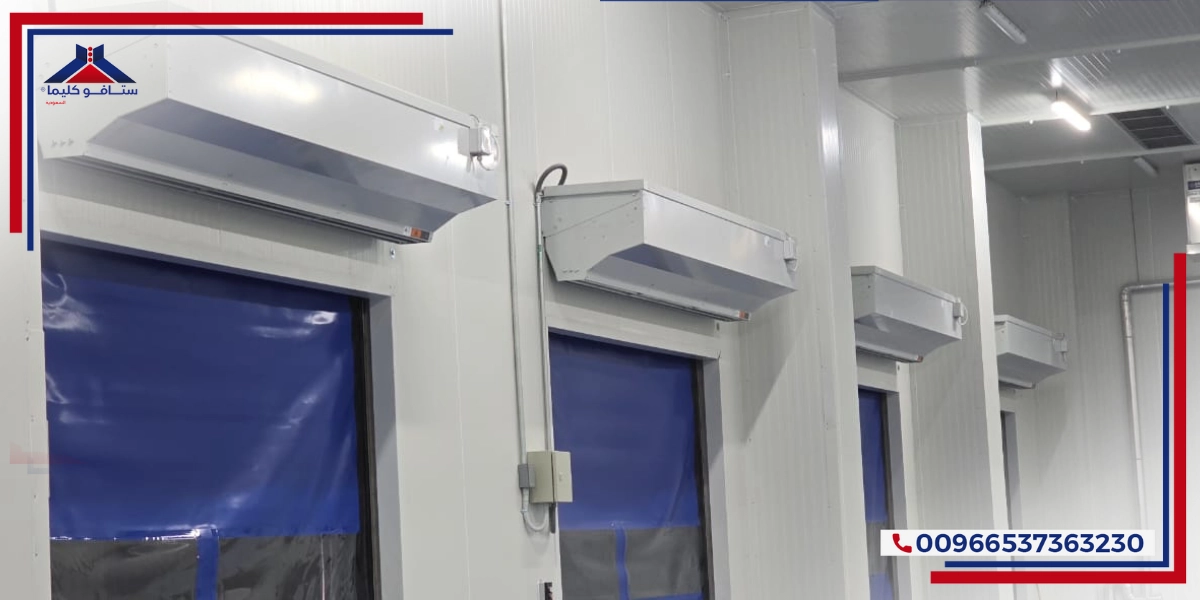
An air curtain is not usually considered a complete HVAC system by itself, but it can be an important supporting solution within an HVAC strategy.
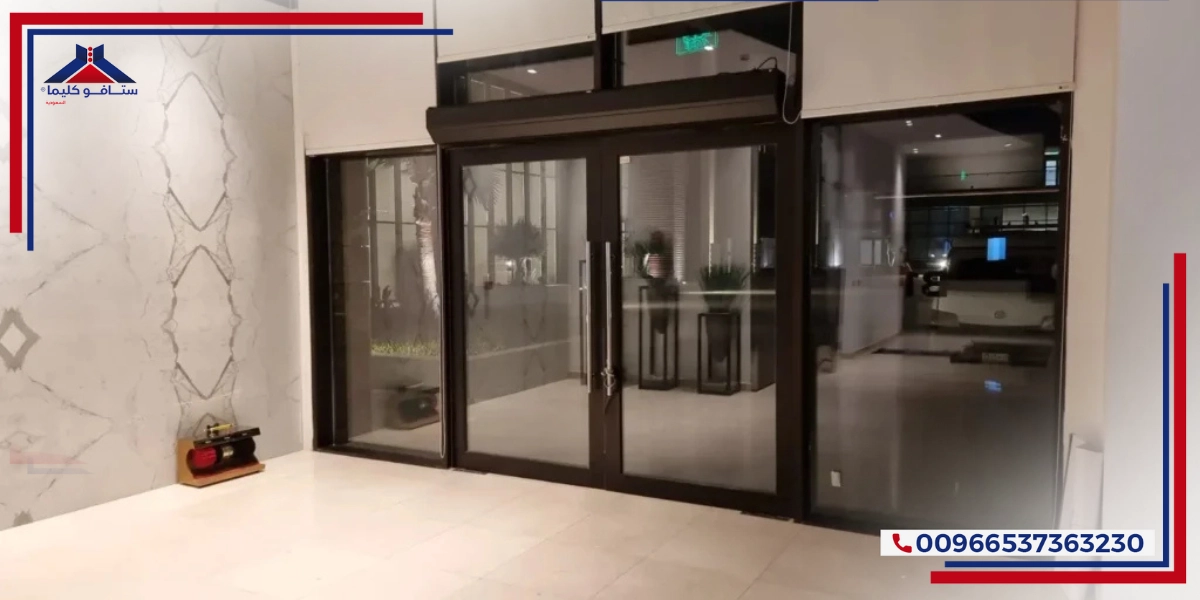
An air curtain creates a controlled stream of air across an entrance or opening. This invisible air barrier helps separate indoor and outdoor environments while allowing people and goods to move freely.
In hot climates like Saudi Arabia, this is especially useful at entrances where doors open frequently.
What Does an Air Curtain Do?
An air curtain can help:
- Reduce hot outdoor air entering the building.
- Keep cooled indoor air inside.
- Support HVAC efficiency.
- Improve comfort near entrances.
- Reduce dust, insects, and outdoor pollutants.
- Support better temperature stability in commercial spaces.
For example, in a retail store, restaurant, mall entrance, showroom, warehouse, or hotel lobby, every door opening can allow cooled air to escape and hot air to enter. This forces the HVAC system to work harder.
A properly selected air curtain helps reduce this problem by protecting the entrance point.
Is an Air Curtain Part of HVAC?
An air curtain is best described as a complementary HVAC efficiency solution. It does not replace the main air conditioning system, but it helps the HVAC system perform better by reducing unwanted air exchange at entrances.
This makes air curtains especially valuable in:
- Shopping malls
- Supermarkets
- Restaurants and cafés
- Hotels
- Hospitals
- Warehouses
- Airports
- Commercial offices
- Showrooms
- Industrial facilities
Air curtains have also been discussed in relation to energy efficiency and building entrance performance, including their role as alternatives to vestibules in certain energy code contexts such as ASHRAE 90.1-2019.
If your facility has high-traffic entrances, loading doors, or commercial access points, contact Stavoklima for a free consultation and discover how air curtains can help protect indoor comfort and HVAC performance.
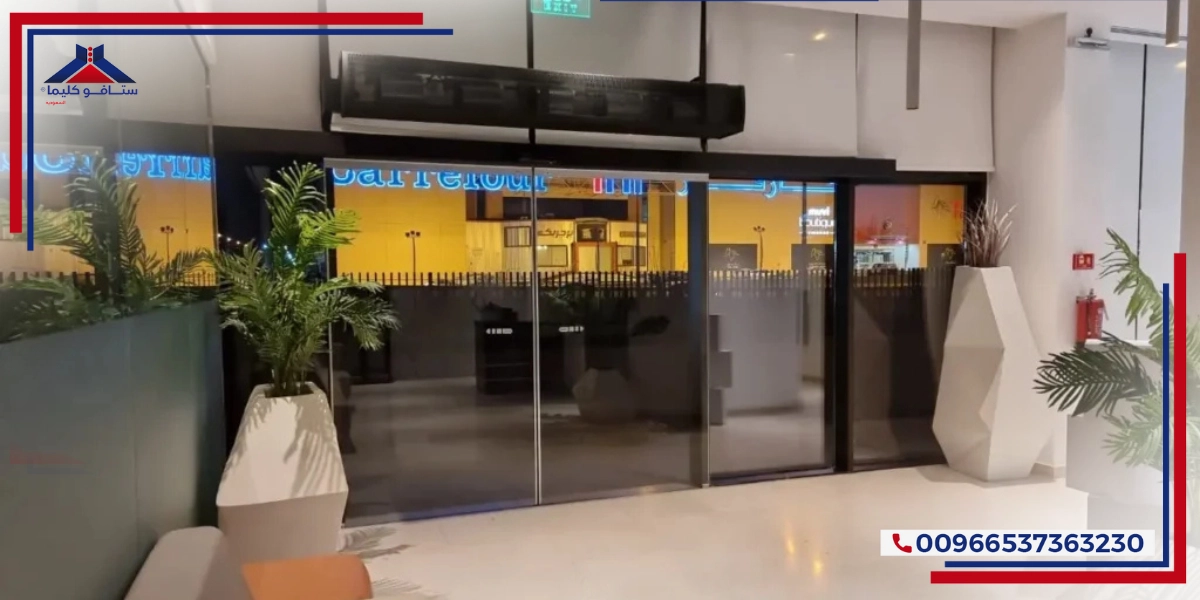
HVAC Efficiency: Why Entrances Matter?
Many building owners focus on the main HVAC equipment, such as chillers, compressors, ducts, or thermostats. But one area is often overlooked: the entrance.
In commercial buildings, entrances are high-traffic points. Every time a door opens, there is an exchange between indoor and outdoor air. In Saudi Arabia’s hot climate, this can create several problems:
- Warm air enters the building.
- Cooled air escapes.
- Indoor temperature becomes unstable.
- HVAC systems consume more energy.
- Entrance areas become uncomfortable.
- Dust and insects may enter more easily.
This is where air curtains become a practical solution. By creating an air barrier at the entrance, they help protect the conditioned indoor environment and reduce pressure on the HVAC system.
For businesses, this can mean better comfort, improved customer experience, and more efficient cooling performance.
Do not let cooled air escape every time your doors open. Explore Stavoklima air curtains and create a smarter air barrier for your store, warehouse, hotel, clinic, or commercial building.
HVAC and Saudi Arabia’s Vision 2030
Saudi Arabia’s Vision 2030 is creating a new generation of large-scale buildings, destinations, and urban developments.
For these projects, HVAC is not just a comfort system; it is part of the infrastructure needed to keep buildings efficient, sustainable, and ready for heavy daily use in a hot climate.
Why HVAC Matters to Vision 2030 Projects in KSA?
Tourism growth means more climate-controlled spaces
Saudi Arabia has already surpassed its original target of 100 million visitors and now aims to reach 150 million annual visitors by 2030.
This growth increases the demand for hotels, airports, malls, restaurants, entertainment venues, museums, healthcare facilities, and mixed-use destinations.
All of these buildings need reliable HVAC systems to maintain indoor comfort, ventilation, and air quality for large numbers of visitors.
The HVAC market is growing with national development
The Saudi HVAC market is estimated at USD 3.47 billion in 2025 and is expected to reach USD 4.63 billion by 2030, with a projected CAGR of 5.90%.
This growth reflects how essential cooling, ventilation, and indoor comfort systems have become across residential, commercial, industrial, and hospitality projects in the Kingdom.
Cooling demand makes energy efficiency a priority
According to Saudi household energy statistics, air conditioning units operated for an average of 51.5 hours per week in 2023.
This shows how central cooling is to daily life in Saudi Arabia, and why improving HVAC efficiency can directly affect electricity use, operating costs, and sustainability performance.
Sustainable cities need smarter HVAC strategies
Vision 2030 projects such as NEOM are being developed around advanced sustainability goals, with NEOM described as a futuristic region powered by 100% renewable energy.
In this kind of development direction, HVAC systems need to do more than cool buildings; they must support energy-conscious design, smart controls, indoor air quality, and long-term operational efficiency.
Where Air Curtains Fit Into This Vision?
As buildings become larger and busier, one of the biggest HVAC challenges appears at entrances. Every time a door opens, cooled indoor air can escape while hot outdoor air, dust, and humidity enter the building.
This forces the HVAC system to work harder, especially in high-traffic spaces such as malls, hotels, hospitals, restaurants, warehouses, and commercial facilities.
This is where air curtains become highly relevant. By creating an invisible air barrier at entrances, air curtains help reduce air exchange between indoor and outdoor spaces.
They do not replace HVAC systems, but they help protect their performance by keeping cooled air inside and reducing the impact of frequent door openings.
For Vision 2030 buildings, this makes air curtains a practical support solution for improving comfort, reducing energy waste, and helping HVAC systems perform more efficiently in Saudi Arabia’s demanding climate.
Ready to make your HVAC system work smarter? Partner with Stavoklima Saudi Arabia to improve entrance protection, reduce cooling loss, and create a more comfortable indoor environment.
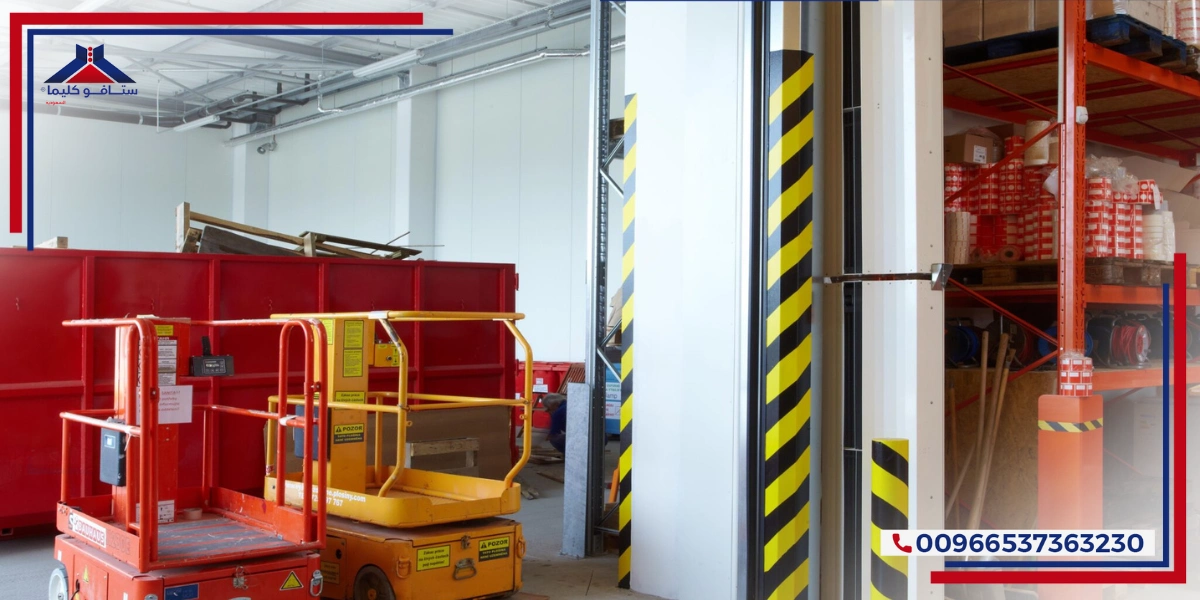
Stavoklima Saudi Arabia: Air Curtain Solutions That Support HVAC Efficiency
In Saudi Arabia’s hot climate, HVAC performance is not only about producing cool air; it is also about protecting that cooled air from escaping.
At Stavoklima, we help buildings improve HVAC efficiency by providing advanced European air curtain solutions designed to reduce air exchange at entrances, maintain indoor comfort, and support better energy performance.
We work with commercial, industrial, healthcare, hospitality, logistics, and retail facilities that need reliable entrance protection without interrupting daily movement.
Our solutions create an engineered air barrier that helps separate indoor and outdoor environments while allowing people, vehicles, and goods to move smoothly.
Key Highlights About Our Company
Specialize in air curtain solutions
At Stavoklima Saudi Arabia, air curtains are our core focus. We provide solutions that complement HVAC systems by helping preserve cooled indoor air, reduce hot air infiltration, and protect entrances where air loss usually happens the most.
Designing solutions for Saudi Arabia’s climate
We understand the challenges of operating buildings in high temperatures, dusty conditions, humidity, and frequent door openings.
That is why we provide air curtain solutions suitable for the Saudi market and its demanding commercial and industrial environments.
supporting HVAC energy efficiency
Our air curtains help reduce unwanted air exchange between indoor and outdoor spaces. By limiting cooled air loss and reducing the load on air conditioning systems, our solutions can support better HVAC performance and more efficient energy use.
Serving multiple sectors
We provide air curtain solutions for malls, warehouses, restaurants, hotels, hospitals, factories, retail stores, logistics centers, and commercial buildings. This allows us to support different project types with solutions that match each facility’s needs.
Partnering with businesses for better building performance
Our role goes beyond supplying air curtains. We help consultants, contractors, facility managers, and business owners choose the right solution for each entrance, with the goal of improving indoor comfort, air quality, and long-term operational efficiency.
Looking to protect your cooled indoor air and improve HVAC performance? Contact Stavoklima and let our team help you choose the right air curtain solution for your building entrance.
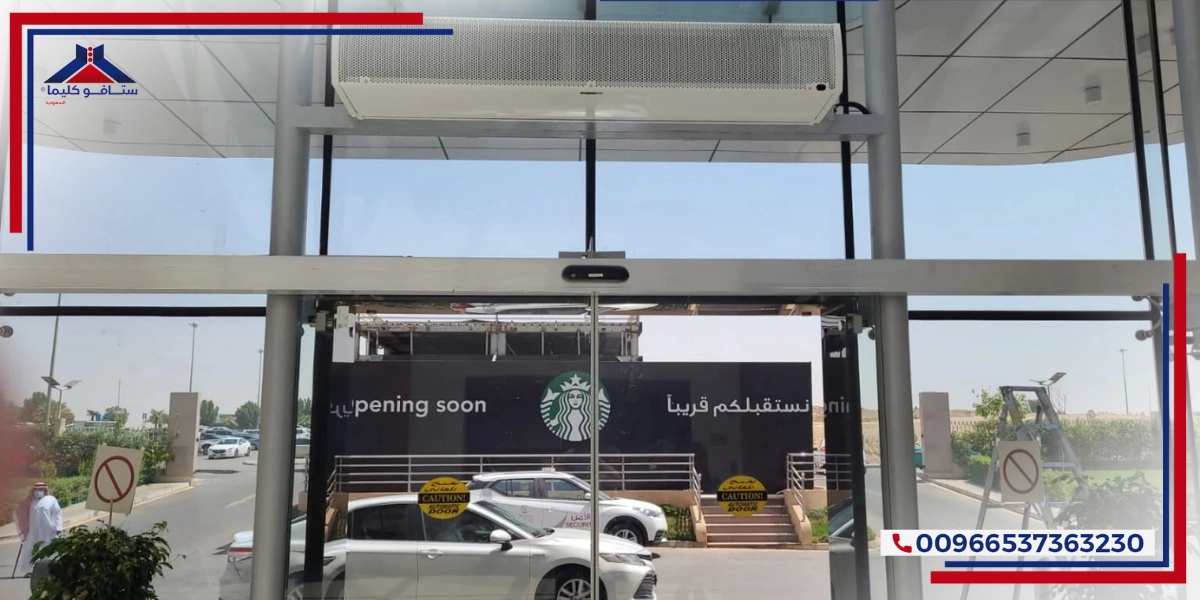
Stavoklima Projects in Saudi Arabia: Real Applications of Air Curtains
At Stavoklima Saudi Arabia, we believe the value of air curtains becomes clearer when seen in real projects.
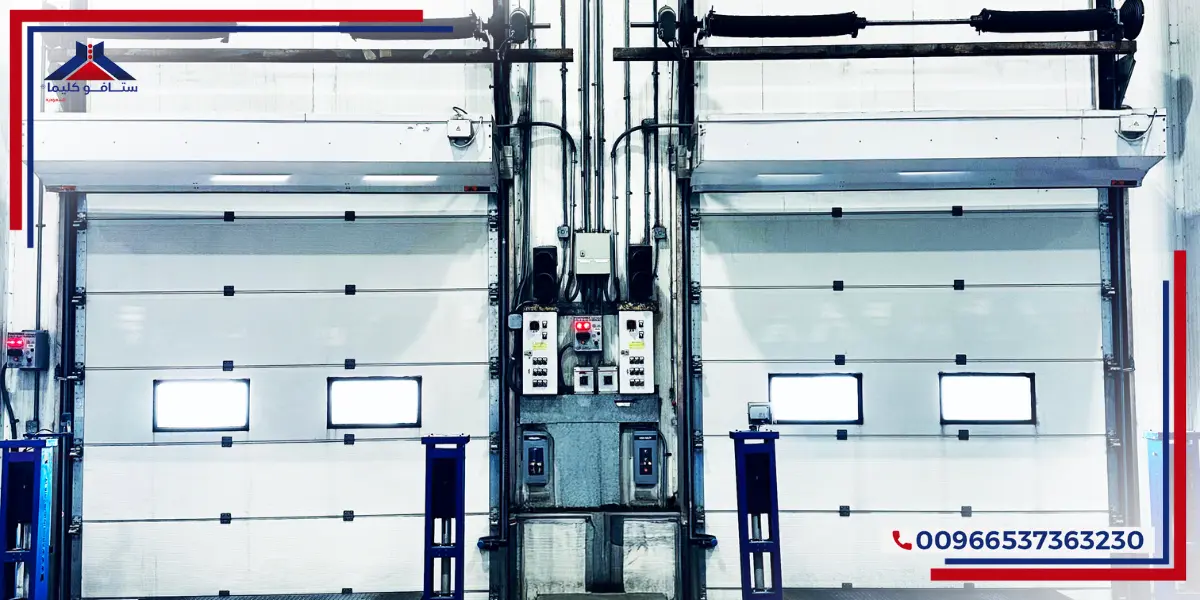
Across different facilities in the Kingdom, we have provided air curtain solutions that help protect indoor environments, support HVAC efficiency, and improve daily operations at entrances, loading areas, refrigeration zones, and sensitive storage spaces.
Our projects show how the right air curtain model can reduce unwanted air infiltration, limit dust and humidity, support temperature stability, and help buildings maintain a cleaner and more comfortable indoor environment.
Featured Projects We Have Worked On:
Panda Chain Warehouses Project
In the Panda Chain warehouses project, we supplied AXI9 air curtain units to help protect warehouse entrances from heat, humidity, and dust.
Because warehouse doors often experience frequent movement, our solution helped create an effective air barrier while allowing smooth goods flow and daily operations.
Medi-Serv Medical Project
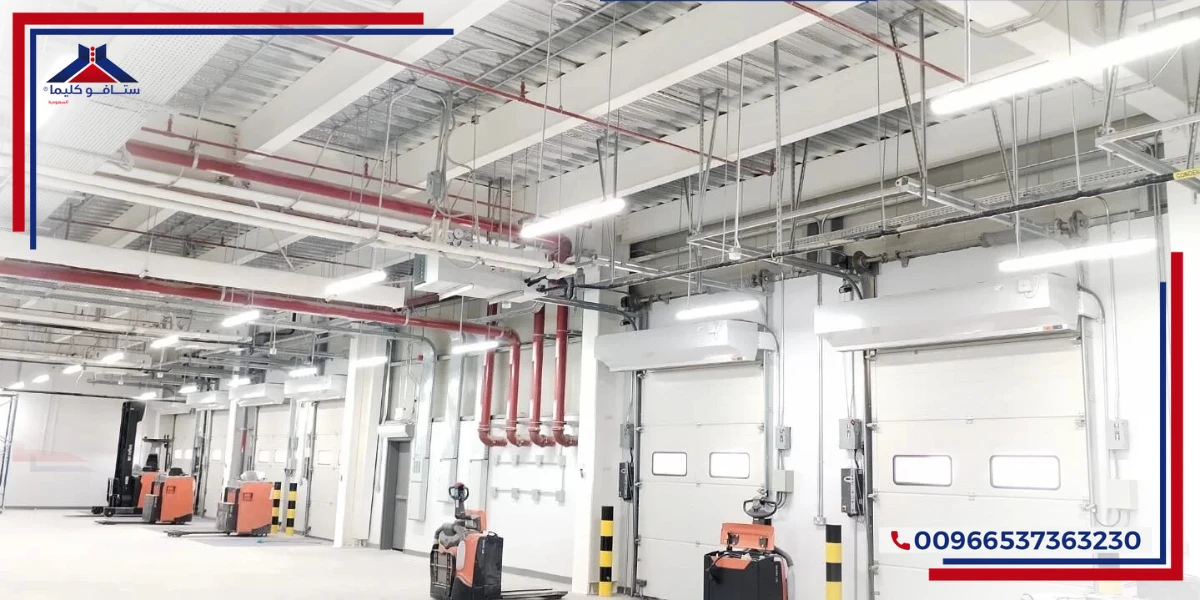
In the Medi-Serv Medical project, we provided AXI3 and AXI2 air curtain models to help isolate refrigeration rooms and storage areas.
In medical-related facilities, temperature stability and clean storage conditions are essential, so our air curtains helped reduce hot air leakage and support better environmental control.
Apple Warehouses Project
In the Apple warehouses project, we installed Axi3 and Li0 Light air curtains to support a stable, cleaner, and more protected storage environment.
For high-value storage spaces, reducing dust, improving air quality, and limiting temperature changes are key priorities.
Our solution helped achieve this without creating physical barriers that could interrupt workflow.
Conclusion
HVAC is one of the most important systems in any modern building. It controls temperature, ventilation, air quality, humidity, and indoor comfort.
In Saudi Arabia, where hot weather places heavy demand on cooling systems, HVAC is essential for residential, commercial, industrial, and hospitality projects. As the market continues to grow and buildings become more energy-conscious, efficiency will become even more important.
Air curtains are not a replacement for HVAC, but they are a smart complementary solution. By protecting entrances from hot outdoor air, they help maintain indoor comfort, reduce pressure on cooling systems, and support better energy performance.
For building owners, contractors, facility managers, and developers, understanding HVAC is the first step toward creating more comfortable, efficient, and sustainable buildings.
References
1-Mordor Intelligence – Kingdom of Saudi Arabia HVAC Market Size
2-Saudi Energy Efficiency Center – About SEEC
3-Ministry of Energy – Saudi Energy Efficiency Center
4-Saudi Vision 2030 – Official Projects Page
5-ASHRAE Terminology – HVAC and Building Systems Terms
FAQs about HVAC in Saudi Arabia
1-What Does HVAC Stand For?
HVAC stands for:
H – Heating
V – Ventilation
AC – Air Conditioning
2-What is the difference between HVAC and AC?
- AC stands for air conditioning and mainly refers to cooling. HVAC stands for heating, ventilation, and air conditioning.
- HVAC is a complete system that includes cooling, heating, ventilation, air filtration, humidity control, and system controls.
3-Is an air curtain part of an HVAC system?
An air curtain is not a complete HVAC system by itself, but it is often used as a supporting solution for HVAC efficiency.
It helps reduce air exchange at entrances, keeping cooled indoor air inside and hot outdoor air outside.
4-What are the main components of HVAC?
The main components of HVAC include the heating system, ventilation system, air conditioning system, air distribution components, filters, ducts, fans, thermostats, sensors, and control systems.
5-Why does HVAC consume so much electricity?
HVAC can consume a lot of electricity because cooling and heating require significant energy, especially in large buildings or hot climates.
In Saudi Arabia, high outdoor temperatures increase cooling demand, which makes efficient HVAC design and entrance protection solutions such as air curtains especially important.