



In any HVAC system, the equipment may produce the cooling or heating, but the HVAC duct network is what delivers conditioned air to the right spaces. A well-designed duct system helps maintain comfort, airflow balance, energy efficiency, indoor air quality, and reliable system performance.
Poor HVAC ducting can cause many problems: weak airflow, high static pressure, noisy operation, uneven cooling, energy waste, air leakage, condensation, and difficulty during maintenance. That is why ductwork design and installation should never be treated as a secondary part of HVAC work.
In Saudi Arabia’s hot climate, duct performance becomes even more important. Long cooling hours, high outdoor temperatures, dusty conditions, and large commercial spaces make duct material, insulation, sealing, and air distribution critical to HVAC efficiency. The Saudi Arabia HVAC ductwork market was estimated at USD 1,079.1 million in 2025 and is expected to reach USD 2,380.9 million by 2034, reflecting growing demand for duct installation across construction and HVAC projects.
This guide explains the main HVAC duct types, common HVAC duct material options, duct system design principles, static pressure, fittings, insulation, cladding, installation best practices, and how air curtains can act as a smart endpoint for reducing air loss at entrances.
Table of Contents
ToggleWhat Is HVAC Ductwork?
HVAC ductwork is the network of ducts used to move conditioned air from HVAC equipment to different areas of a building. It can carry supply air, return air, exhaust air, or fresh air depending on the system design.
A complete duct system may include:
- Main supply ducts
- Branch ducts
- Return ducts
- Exhaust ducts
- Fresh air ducts
- Duct fittings
- Dampers
- Flexible connectors
- Access doors
- Insulation
- Cladding
- Diffusers, grilles, and registers
- Air curtains at entrance points
ASHRAE describes duct system design as a process that helps engineers properly size fans, reduce fan energy consumption, minimize system-generated noise, and optimize ductwork cost and performance.
In simple terms, ductwork is the air distribution highway of the HVAC system. If the duct network is poorly designed or installed, even high-quality HVAC equipment may fail to perform properly.
Why HVAC Ductwork Matters
The duct system affects almost every part of HVAC performance.
A good duct system helps:
- Deliver the correct airflow to each zone.
- Reduce fan energy consumption.
- Maintain comfortable indoor temperatures.
- Reduce noise caused by excessive velocity.
- Improve air balance between rooms.
- Support indoor air quality.
- Reduce air leakage.
- Prevent condensation in hot and humid climates.
- Protect HVAC equipment from unnecessary strain.
A bad duct system can lead to:
- High static pressure
- Poor airflow
- High energy consumption
- Hot and cold spots
- Noisy diffusers
- Dust leakage
- Condensation
- Low comfort
- Frequent maintenance complaints
SMACNA states that its HVAC duct construction standards cover metal and flexible duct fabrication and installation, and its technical resources cover duct construction, installation, testing, balancing, indoor air quality, and related sheet metal work.

Types of HVAC Ducts
There are several HVAC duct types, and each type has a specific use depending on project size, air pressure, space limitations, and installation requirements.
1. Rigid Sheet Metal Ducts
Rigid sheet metal ducts are among the most common duct types in commercial and industrial HVAC systems. They are usually made from galvanized steel, stainless steel, or aluminum.
Where Rigid Metal Ducts Are Used
Rigid ducts are used in:
- Commercial buildings
- Offices
- Malls
- Hospitals
- Hotels
- Industrial facilities
- Warehouses
- Large residential projects
- Mechanical rooms
- Main duct routes
Advantages
- Strong and durable: Metal ducts can withstand mechanical stress and are suitable for long-term use.
- Smooth internal surface: This helps reduce airflow resistance compared with rougher materials.
- Suitable for large systems: They can handle higher airflow and larger duct sizes.
- Easier to clean: Metal duct surfaces are generally easier to inspect and clean.
- Widely accepted in commercial projects: Galvanized steel is a common duct material in professional HVAC installation.
Limitations
- Higher installation labor compared with flexible duct.
- Requires proper sealing to reduce leakage.
- Needs insulation in hot climates.
- Can transmit noise if not designed correctly.
- Requires accurate fabrication and coordination.
Best Use Case
Rigid sheet metal ducts are best for main supply and return duct systems in commercial, industrial, and large residential projects where durability and airflow performance are important.
2. Flexible Ducts
Flexible ducts are made from a flexible inner liner, insulation, and an outer jacket. They are commonly used for short duct connections between rigid ducts and diffusers.
Where Flexible Ducts Are Used
Flexible ducts are used in:
- Ceiling spaces
- Residential buildings
- Small commercial spaces
- Final connections to diffusers
- Short branch runs
- Areas with difficult routing
Advantages
- Easy to install: Flexible duct can bend around obstacles.
- Lower labor cost: It is faster to install in many small applications.
- Useful for final connections: It works well between rigid duct and ceiling diffusers.
- Reduces vibration transfer: It can help reduce vibration between duct components.
Limitations
- Long runs can create high pressure loss.
- Poor installation can reduce airflow significantly.
- Sharp bends and compression reduce performance.
- It is less durable than rigid metal duct.
- It should not be used as a careless substitute for proper duct routing.
Best Use Case
Flexible ducts are best for short final connections, not long main duct runs. They must be stretched properly, supported correctly, and kept as straight as possible.
3. Fiberglass Duct Board
Fiberglass duct board is made from compressed fiberglass panels with a facing material. It provides duct structure and thermal insulation in one product.
Where Fiberglass Duct Board Is Used
It may be used in:
- Light commercial systems
- Residential systems
- Low-pressure applications
- Spaces where insulation and sound absorption are needed
Advantages
- Built-in insulation
- Reduced thermal losses
- Sound absorption
- Lighter than metal ducts
- Can reduce condensation risk when properly installed
Limitations
- More sensitive to moisture
- Can be harder to clean than metal duct
- Must be protected from damage
- Not suitable for all industrial environments
- Requires careful fabrication and sealing
Best Use Case
Fiberglass duct board can be suitable for low-pressure applications where thermal insulation and acoustic performance are important, but it must be protected from moisture and contamination.
4. Fabric Ducts
Fabric ducts, also called textile ducts, distribute air through fabric material or engineered openings. They are often used in spaces where lightweight installation and uniform air distribution are required.
Where Fabric Ducts Are Used
Fabric ducts are used in:
- Sports halls
- Warehouses
- Food production spaces
- Retail halls
- Swimming facilities
- Industrial open spaces
- Large occupied areas
Advantages
- Lightweight
- Good air distribution
- Reduced condensation in some applications
- Can be washable depending on product type
- Available in different colors and shapes
- Suitable for exposed ceiling designs
Limitations
- Not suitable for every project
- Requires manufacturer-specific design
- May need periodic cleaning
- Can be affected by airflow pressure and fabric tension
- Not usually used for concealed traditional duct networks
Best Use Case
Fabric ducts are useful in large open spaces where uniform air distribution, light weight, and exposed installation are acceptable.
5. Pre-Insulated Ducts
Pre-insulated ducts are duct panels that combine duct structure and insulation. They are often used in projects where faster installation and thermal performance are required.
Where Pre-Insulated Ducts Are Used
They are used in:
- Commercial buildings
- Offices
- Retail spaces
- Villas
- Light commercial HVAC projects
- Indoor duct routes
- Some rooftop or semi-exposed applications with proper protection
Advantages
- Built-in insulation
- Lightweight
- Faster installation
- Reduced need for separate duct wrapping
- Lower thermal loss when properly sealed
Limitations
- Requires trained installers
- Needs protection from physical damage
- Not suitable for all high-pressure or industrial systems
- Joint quality is very important
- Outdoor applications require suitable weather protection
Best Use Case
Pre-insulated ducts are suitable for projects where insulation, speed, and lightweight installation are important, provided that the system pressure and environmental exposure match the product limits.
HVAC Duct Material: Steel vs Fiberglass vs Flex
Choosing the right HVAC duct material depends on the building type, system pressure, installation space, climate, budget, and maintenance needs. The table below compares the most common duct materials used in residential, commercial, and industrial HVAC ductwork.
HVAC Duct Material | Best Used For | Key Advantages | Main Limitations |
Galvanized Steel Duct | Commercial buildings, industrial facilities, main duct routes, high-airflow systems | Durable, strong structural performance, suitable for high airflow, widely used in commercial projects, easier to inspect and clean than many alternatives | Requires insulation in hot climates, heavier than flexible or fabric ducts, needs skilled fabrication, may require corrosion protection in special environments |
Aluminum Duct | Specialty applications, lightweight duct routes, areas where corrosion resistance is useful | Lightweight, corrosion-resistant, easier to handle than steel, suitable for selected specialty applications | Can be less rigid than steel, may cost more, not always preferred for large commercial main ducts |
Stainless Steel Duct | Kitchens, laboratories, industrial exhaust, corrosive environments, special applications | High corrosion resistance, durable, suitable for demanding environments, strong performance in hygiene-sensitive or exhaust applications | Expensive, requires skilled fabrication, usually used only where project conditions demand it |
Fiberglass Duct | Low-pressure systems, light commercial projects, spaces needing insulation and acoustic performance | Built-in insulation, sound absorption, lightweight, helps reduce thermal losses | Sensitive to moisture, harder to clean than metal ducts, requires careful installation, not always ideal for dusty or industrial environments |
Flexible Duct | Short final connections, diffuser connections, small residential and commercial spaces, difficult routing areas | Easy to route, fast installation, useful for final diffuser connections, lower installation effort | Higher pressure loss if long, compressed, or sharply bent; can sag if poorly supported; less durable than metal; easily damaged |
Quick Selection Guide
If Your Priority Is... | Recommended Material |
Durability and commercial-grade performance | Galvanized Steel |
Corrosion resistance with lighter weight | Aluminum |
High corrosion resistance or special exhaust use | Stainless Steel |
Built-in insulation and acoustic control | Fiberglass Duct |
Fast installation for short final connections | Flexible Duct |
A practical material selection should consider airflow performance, durability, pressure class, leakage control, cleaning access, fire requirements, insulation needs, and the operating conditions of the building.
HVAC Duct System Design and Static Pressure
Duct design is not only about connecting equipment to rooms. It is about moving the required air volume with the lowest practical pressure loss, acceptable noise, and proper air balance.
What Is Static Pressure?
Static pressure is the resistance that the fan must overcome to move air through the HVAC system.
It is affected by:
- Duct length
- Duct size
- Number of fittings
- Filters
- Coils
- Dampers
- Diffusers
- Grilles
- Fire dampers
- Flexible duct bends
- Duct leakage
- Poor installation
If static pressure is too high, the fan may struggle to deliver the required airflow. This can reduce comfort, increase noise, and raise energy consumption.
Why Static Pressure Matters
High static pressure can cause:
- Low airflow at diffusers
- Increased fan energy
- Noise in ducts and terminals
- Reduced cooling performance
- Poor room comfort
- Equipment strain
- Difficult balancing
- Higher maintenance issues
ASHRAE’s duct design guidance focuses on properly sized fans, lower fan energy consumption, reduced installed duct cost, and reduced system-generated noise.
Key Duct Design Principles
A good duct design should:
- Use correct airflow calculations.
- Keep duct routes as direct as possible.
- Avoid unnecessary bends and transitions.
- Size ducts based on airflow and velocity limits.
- Control pressure drop through fittings.
- Reduce leakage with proper sealing.
- Coordinate with structure, ceiling, and services.
- Provide balancing dampers where needed.
- Allow access for cleaning and maintenance.
- Match duct pressure class to system operating pressure.

HVAC Duct Fittings Names and Functions
Understanding HVAC duct fittings names is important for engineers, contractors, and site teams because fittings affect airflow, pressure drop, and installation quality.
Common HVAC Duct Fittings
1. Elbow
An elbow changes the direction of airflow. Poorly designed elbows can create turbulence and pressure loss.
2. Transition
A transition changes duct size or shape, such as from rectangular to round or from large to small.
3. Reducer
A reducer decreases duct size to match airflow needs or equipment connection.
4. Tee
A tee splits airflow into two directions, but it should be designed carefully to avoid imbalance.
5. Wye
A wye fitting divides airflow more smoothly than a sharp tee and often reduces pressure loss.
6. Takeoff
A takeoff connects a branch duct to a main duct.
7. Plenum Box
A plenum box distributes air from an AHU, FCU, diffuser, or grille connection.
8. Flexible Connector
A flexible connector reduces vibration transfer between equipment and ductwork.
9. Volume Control Damper
A volume control damper balances airflow in duct branches.
10. Access Door
An access door allows inspection, cleaning, and maintenance of internal duct components.
11. Fire Damper
A fire damper is installed where ducts pass through fire-rated assemblies.
12. Back Draft Damper
A back draft damper prevents reverse airflow, often in exhaust systems.
Why Fittings Matter
Every fitting adds resistance to the duct system. A duct route with too many sharp fittings may require more fan power and may create noise or airflow imbalance. Good duct design reduces unnecessary fittings and uses smoother transitions where possible.
HVAC Ductwork Installation Best Practices
Good HVAC ductwork installation is just as important as good design. A correct drawing can still fail if ducts are poorly fabricated, installed, sealed, supported, or insulated.
1. Follow Approved Drawings and Standards
Installation should follow approved shop drawings, project specifications, SMACNA-based construction requirements, and local code requirements.
SMACNA’s HVAC duct construction standards are widely used in the industry for metal and flexible duct fabrication and installation.
2. Use the Correct Duct Gauge and Reinforcement
Duct thickness, reinforcement, joints, and supports should match pressure class, duct size, and project specifications.
3. Seal Duct Joints Properly
Leaks waste conditioned air and reduce system efficiency. Joints, seams, access doors, and connections should be sealed according to the specified leakage class.
4. Support Ducts Correctly
Ducts must be supported with proper hangers and spacing. Poor support can cause sagging, joint stress, noise, and leakage.
5. Avoid Sharp Bends and Crushed Flexible Duct
Flexible duct should not be crushed, kinked, or installed in long unsupported runs. Sharp bends increase pressure loss and reduce airflow.
6. Provide Access for Maintenance
Duct systems should include access panels near dampers, fire dampers, coils, filters, and cleaning points.
7. Coordinate With Other Services
Ductwork must be coordinated with electrical, plumbing, fire protection, structure, ceiling levels, and architectural elements.
8. Test, Adjust, and Balance
After installation, airflow should be tested and balanced to confirm that each diffuser, grille, and zone receives the required airflow.
SMACNA notes that its resources cover testing, adjusting, and balancing as well as indoor air quality and duct construction topics.
Duct Insulation in Hot Climates
In hot climates like Saudi Arabia, duct insulation is essential. Without proper insulation, conditioned air can gain heat as it travels through the duct system, especially when ducts pass through unconditioned spaces, rooftops, shafts, or ceiling voids.
Why Duct Insulation Matters
Duct insulation helps:
- Reduce heat gain
- Improve cooling efficiency
- Prevent condensation
- Protect indoor comfort
- Reduce energy waste
- Improve system performance
- Reduce noise in some applications
Where Insulation Is Most Important
Insulation is especially important for:
- Supply air ducts
- Ducts in unconditioned spaces
- Rooftop duct runs
- Ducts near external walls
- Fresh air ducts
- Chilled air distribution
- High-humidity areas
- Long duct routes
Common Insulation Problems
Poor insulation can cause:
- Condensation on duct surfaces
- Dripping water above ceilings
- Mold risk
- Thermal losses
- Reduced cooling performance
- Damage to ceiling finishes
- Higher energy consumption
Insulation Best Practices
- Use insulation thickness specified by project standards.
- Protect vapor barriers from damage.
- Seal insulation joints properly.
- Avoid compression of insulation.
- Protect outdoor insulation from weather.
- Inspect insulation after other trades complete work.
HVAC Duct Cladding
HVAC duct cladding is the protective covering installed over insulated ductwork, especially in outdoor, rooftop, mechanical, or exposed areas. Its role is to protect insulation and duct surfaces from weather, sunlight, moisture, mechanical damage, and environmental exposure.
Where Duct Cladding Is Used
Duct cladding is commonly used on:
- Rooftop ducts
- Outdoor ducts
- Exposed plantroom ducts
- Industrial duct runs
- Ducts exposed to sunlight
- Ducts exposed to rain or humidity
- Areas with risk of physical damage
Common Cladding Materials
Common cladding materials include:
- Aluminum cladding
- Galvanized steel cladding
- Stainless steel cladding
- PVC or weatherproof jacketing in selected applications
Why Cladding Is Important in Saudi Arabia
In Saudi Arabia, exposed ducts face heat, sunlight, dust, and sometimes humidity. If insulation is not protected, it can degrade over time, reducing thermal performance and increasing condensation risk.
Good duct cladding helps preserve insulation performance and extends the life of the duct installation.

Air Curtains: The Smartest Network Endpoint
A duct network is designed to deliver conditioned air to rooms, zones, and occupied spaces. But one of the biggest challenges in many buildings happens at the point where the controlled indoor environment meets the outside environment: the entrance.
Standard ducts, diffusers, and grilles distribute air inside the building. But entrances require a different type of air control.
This is where air curtains become a smart endpoint for HVAC air distribution.
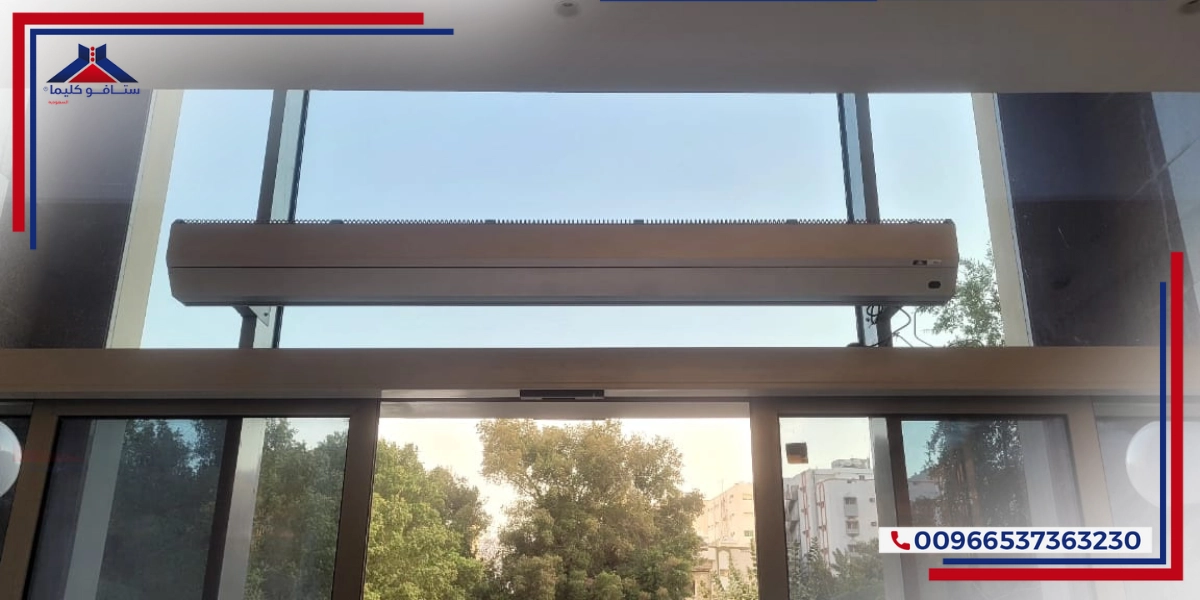
An air curtain creates a controlled air stream across a doorway. This invisible air barrier helps reduce the movement of outdoor air into the building and conditioned indoor air out of the building.
Why Entrances Are Critical HVAC Endpoints
At high-traffic entrances, cooled indoor air can escape every time doors open. At the same time, hot air, dust, humidity, insects, and pollutants can enter.
This affects:
- Cooling load
- Indoor comfort
- HVAC operating hours
- Dust control
- Humidity control
- Entrance temperature stability
- Air balance near doors
How Air Curtains Help the Duct Network
Air curtains support HVAC performance by:
- Reducing cooled-air loss at entrances.
- Limiting hot outdoor air infiltration.
- Supporting stable indoor temperatures.
- Reducing dust and insect entry.
- Improving comfort near doorways.
- Helping the HVAC system maintain performance near high-traffic points.
Do Air Curtains Reduce Pressure Loss?
Air curtains do not reduce static pressure inside the duct network in the same way that better fittings or larger ducts do. Instead, they reduce uncontrolled air exchange at the building entrance. This can reduce the load disturbance at the endpoint of the conditioned space.
In other words:
- Duct design controls pressure loss inside the network.
- Air curtains reduce air loss at the entrance endpoint.
- Both help the HVAC system perform more efficiently.
Stavoklima Saudi Arabia: Air Curtains That Protect HVAC Ductwork Performance
At Stavoklima Saudi Arabia, we specialize in air curtain solutions that protect HVAC performance at building entrances. While HVAC ductwork distributes conditioned air through the building, our air curtains help protect that conditioned air where it is most exposed: at doors and access points.
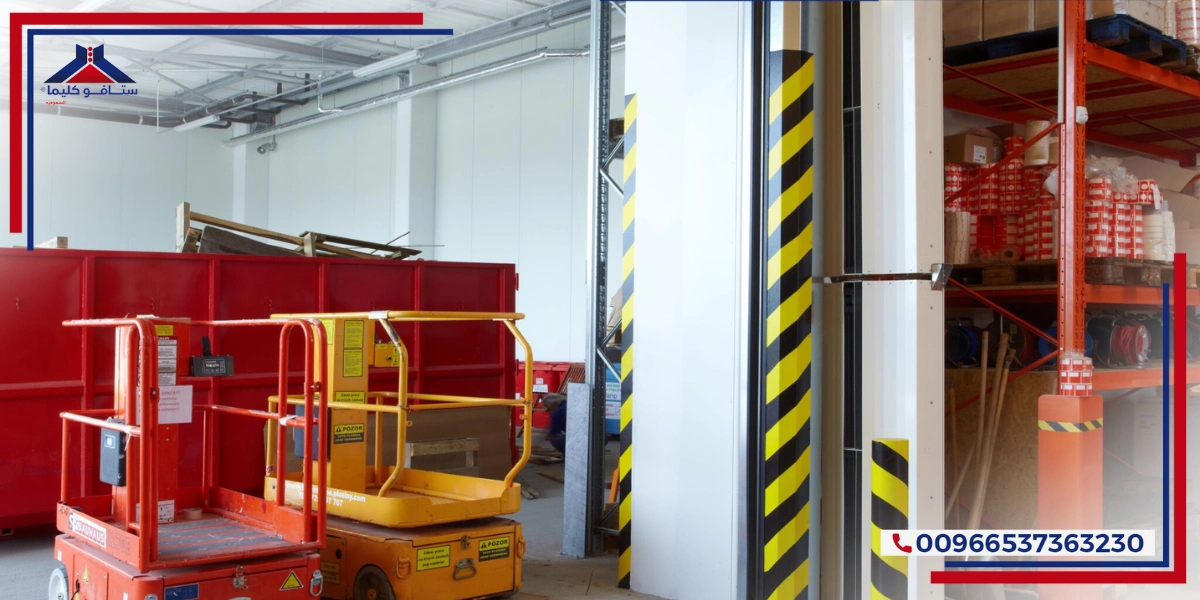
Our solutions are especially useful in buildings where doors open frequently, such as commercial entrances, warehouse loading bays, hospital access points, factory doors, retail storefronts, hotels, restaurants, and logistics facilities.
How We Support HVAC Duct and Air Distribution Systems
- We protect the endpoint of the air distribution network
Ductwork delivers conditioned air indoors. Our air curtains help reduce losses at the entrance boundary. - We help reduce cooled-air loss
Air curtains create an engineered air barrier that limits the escape of cooled air. - We reduce hot air, dust, and humidity infiltration
This is especially important in Saudi Arabia’s climate, where outdoor conditions can affect comfort and indoor air quality. - We support different HVAC system types
Our air curtains can complement ducted systems, package units, VRF systems, chillers, AHUs, and industrial ventilation systems. - We recommend solutions based on each entrance
Door height, traffic level, building pressure, exposure, temperature difference, and installation space all affect model selection.
If your building has high-traffic doors or loading entrances, contact Stavoklima Saudi Arabia to select the right air curtain solution and protect your HVAC ductwork performance from the endpoint.
Stavoklima Projects in Saudi Arabia: Proven Support for HVAC Ductwork Integrity
The effectiveness of integrating advanced air curtains with a building's HVAC ductwork system is best demonstrated through our successful partnerships across the Kingdom. When external air penetrates a facility, it changes the static pressure and thermal load within the ducting network.
These real-world projects showcase how Stavoklima solutions protect the airflow balance, reduce moisture inside the ducts, and support the overall efficiency of the HVAC ductwork.
1. Panda Chain Warehouses: Optimizing Large-Scale Air Distribution
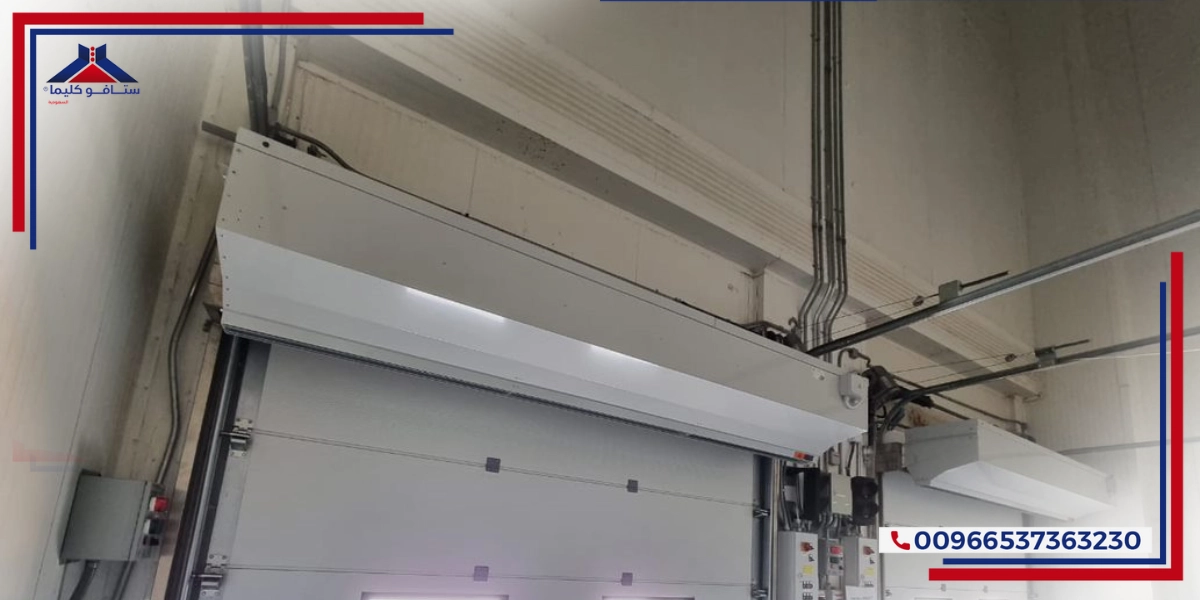
In the Panda Chain warehouses project, we implemented AXI9 air curtain units to secure high-traffic loading bays and entrances. In massive logistics facilities, open doors allow large drafts of hot air to rush inside, causing thermal shock and condensation risks inside the overhead HVAC ductwork. By installing our high-velocity air curtains, we created a powerful barrier at the door. This stabilized the internal air pressure, ensuring that the primary HVAC ductwork could distribute conditioned air evenly across the entire warehouse floor without energy loss or pressure drops.
2. Medi-Serv Medical Project: Preventing Condensation in Healthcare Ducts
For the Medi-Serv Medical project, the main priorities were strict environmental stability and clean storage conditions. We supplied AXI3 and AXI2 air curtain models specifically to isolate refrigeration zones and sensitive medical storage areas. If warm, humid air leaks into cold medical zones, it travels into the return air vents and creates moisture buildup inside the HVAC ductwork, which can lead to mold and biological growth. Our air curtains eliminated this risk by blocking humidity at the threshold, keeping the air dry and ensuring the internal HVAC ductwork remained sterile and efficient.
3. Apple Warehouses: Protecting Air Quality and Pressure Balances
In the Apple warehouses project, we utilized Axi3 and Li0 Light air curtains to protect high-value electronic storage environments. Specialized storage facilities rely on precise positive pressure maintained through a carefully balanced network of HVAC ductwork to keep dust and particulates out. Our air curtains acted as an invisible shield, preventing external dust storms from invading the facility when doors opened. This protection means the filters, diffusers, and internal channels of the HVAC ductwork stay cleaner for longer, drastically reducing maintenance cycles and securing optimal airflow.
What These Projects Show
- Air curtains protect the endpoint of ducted HVAC systems.
- Large facilities need entrance protection to reduce uncontrolled air exchange.
- Public and industrial buildings require comfort without blocking movement.
- Air curtain selection depends on door size, traffic, exposure, and application type.
- HVAC ductwork and air curtains work together: ducts distribute air, and air curtains help keep it inside.
From airports and aviation facilities to warehouses, factories, hotels, and commercial buildings, Stavoklima Saudi Arabia helps protect HVAC efficiency at the entrance. Contact our team for a free consultation and project-specific recommendation.
HVAC Ductwork Design Checklist
Before approving or installing an HVAC duct system, engineers and contractors should review the following:
- Has the required airflow been calculated for every zone?
- Are duct sizes selected based on airflow, velocity, and pressure drop?
- Is static pressure within the fan’s capability?
- Are fittings designed to reduce turbulence and pressure loss?
- Are duct materials suitable for the project type?
- Are ducts insulated where required?
- Is outdoor duct cladding specified?
- Are duct joints and seams sealed properly?
- Are balancing dampers included?
- Are fire dampers and access doors coordinated?
- Are diffusers, grilles, and terminal devices selected correctly?
- Are high-traffic entrances protected with air curtains where needed?
- Is testing, adjusting, and balancing planned after installation?
Final Thoughts
HVAC ductwork is one of the most important parts of any HVAC system. It determines how efficiently conditioned air moves through the building, how well zones are balanced, and how comfortable the indoor environment feels.
A strong duct system starts with the right HVAC duct material, correct HVAC duct types, good design, proper static pressure control, suitable HVAC duct fittings names, quality HVAC ductwork installation, effective insulation, and protective HVAC duct cladding where needed.
But ductwork performance does not end at the diffuser. In buildings with high-traffic entrances, conditioned air can still escape at the final boundary of the space. That is why air curtains are a practical complement to ducted HVAC systems.
A well-designed duct network delivers conditioned air efficiently. A well-selected air curtain helps keep that conditioned air inside the building.
FAQs
What are the best duct materials for hot climates?
Galvanized steel with proper insulation is one of the most common and durable options for commercial HVAC ductwork in hot climates. Pre-insulated ducts, fiberglass duct board, and flexible ducts may also be used depending on system pressure, location, installation space, and project requirements.
What is static pressure and how does it affect HVAC performance?
Static pressure is the resistance that the fan must overcome to move air through the duct system. High static pressure can reduce airflow, increase fan energy, create noise, and reduce HVAC performance.
When should HVAC ducts be cleaned?
HVAC ducts should be inspected and cleaned when there is visible dust buildup, contamination, mold concern, airflow reduction, odor problems, post-construction debris, or according to the facility’s maintenance plan. Cleaning frequency depends on building type, occupancy, filtration, and indoor air quality requirements.
What is the difference between HVAC ducting and HVAC ductwork?
The terms are often used interchangeably. HVAC ducting usually refers to the duct system or duct material, while HVAC ductwork refers to the complete installed network, including ducts, fittings, dampers, insulation, supports, and accessories.
What are common HVAC duct fittings names?
Common HVAC duct fittings include elbows, transitions, reducers, tees, wyes, takeoffs, plenum boxes, flexible connectors, access doors, dampers, and back draft dampers.
Why is HVAC duct insulation important in Saudi Arabia?
Duct insulation reduces heat gain, prevents condensation, and helps maintain cooling performance. In Saudi Arabia’s hot climate, uninsulated or poorly insulated ducts can lose cooling energy quickly, especially in rooftops, shafts, and unconditioned spaces.
How do air curtains reduce pressure loss at network endpoints?
Air curtains do not directly reduce duct static pressure. Instead, they reduce uncontrolled air exchange at entrances, which helps protect the conditioned space and reduces load disturbance at the endpoint of the HVAC air distribution network.