



In any HVAC system, air does not only need to be cooled, heated, or filtered. It also needs to be controlled. This is where HVAC dampers become essential.
An HVAC damper is a device installed inside ductwork, air openings, shafts, or ventilation pathways to control, balance, stop, or redirect airflow. Some dampers are used for comfort and airflow balancing, while others are critical life-safety components designed to resist the spread of fire and smoke through HVAC ducts.
This guide explains the main damper types, including fire damper HVAC, volume damper HVAC, motorized damper HVAC, MSFD in HVAC, mfsd HVAC, back draft dampers, and the role of actuators in damper operation. It also explains how fire and smoke dampers relate to Saudi code compliance and how air curtains complement damper systems by protecting entrances from heat, dust, humidity, and uncontrolled outdoor air.
Table of Contents
ToggleWhat Is an HVAC Damper?
An HVAC damper is a mechanical airflow control device used inside heating, ventilation, and air conditioning systems. It is typically installed inside ductwork or air openings and can be used to open, close, restrict, balance, or isolate airflow.
In simple terms, dampers help the HVAC system answer three important questions:
- How much air should pass?
- Where should the air go?
- When should the air stop moving?
Depending on the application, HVAC dampers can support comfort, energy efficiency, pressure control, ventilation balancing, smoke control, and fire protection.
NFPA explains that HVAC systems move air throughout buildings, and fire/smoke dampers are used because ductwork and air openings can become pathways for smoke and fire spread if they are not properly protected.
Why HVAC Dampers Matter?
HVAC dampers are small compared with chillers, AHUs, ducts, and fans, but their role is critical. A poorly selected or incorrectly installed damper can lead to airflow imbalance, poor comfort, pressure issues, smoke movement, fire-safety risks, and inefficient HVAC operation.
HVAC Dampers Help With:
- Airflow balancing between rooms and zones
- Fire and smoke containment
- Isolation of duct sections
- Control of fresh air and exhaust air
- Prevention of reverse airflow
- HVAC zoning and automation
- System commissioning and testing
- Energy efficiency through controlled airflow
In commercial and multi-storey buildings, dampers are especially important because ductwork may pass through fire-rated walls, floors, shafts, corridors, and smoke compartments. In these areas, the damper is not just a comfort device; it can become part of the building’s fire and life-safety strategy.
The Saudi Building Code platform lists the Saudi Mechanical Code SBC 501 and Saudi Fire Protection Code SBC 801 among the official building code documents used for mechanical and fire protection requirements in Saudi Arabia.
Main Types of HVAC Dampers
HVAC dampers are not all the same. Each type has a different function, control method, and installation requirement.
The most common types include:
- Fire dampers
- Smoke dampers
- MSFD / MFSD dampers
- Volume control dampers
- Motorized dampers
- Back draft dampers
- Pressure relief dampers
- Zone dampers
Fire Damper HVAC: Function and Installation
A fire damper HVAC device is designed to help prevent fire from spreading through ductwork or air openings. It is usually installed where ducts pass through fire-rated walls, floors, or partitions.
When a fire occurs, the damper closes automatically to help maintain the integrity of the fire-rated barrier.
How a Fire Damper Works?
A fire damper is usually held open during normal HVAC operation. When the temperature rises during a fire, a fusible link or thermal device releases the damper blades, causing them to close.
Once closed, the damper helps block the duct opening and reduce the chance of fire passing through the duct system into another fire compartment.
Where Fire Dampers Are Commonly Installed?
Fire dampers are commonly installed:
- At fire-rated wall penetrations
- At fire-rated floor penetrations
- In ducts passing through fire compartments
- In vertical shafts
- In mechanical rooms
- In riser openings
- Where required by the project’s approved fire strategy
The International Code Council explains that fire, smoke, and combination fire/smoke dampers are used to protect openings in fire-resistance-rated and smoke-resistant assemblies, with application depending on the building code, duct location, and type of barrier.
Fire Damper Installation Considerations
Fire damper installation must follow the approved tested assembly and manufacturer instructions. Important installation considerations include:
- Correct damper type and rating
- Correct location in the fire-rated barrier
- Proper sleeve installation
- Correct retaining angles or approved mounting method
- Access door for inspection and maintenance
- Proper duct connection
- No obstruction to blade movement
- Compliance with approved drawings and local authority requirements
SMACNA’s fire, smoke, and radiation damper guide is widely referenced for HVAC damper installation methods and illustrates generic installation details for fire dampers, smoke dampers, and ceiling dampers in HVAC systems.
Smoke Damper in HVAC
A smoke damper is designed to restrict or stop smoke movement through ductwork and air openings. While a fire damper focuses on fire spread, a smoke damper focuses on smoke control.
Smoke can be one of the most dangerous elements in a building fire because it can move quickly through ducts, shafts, corridors, and openings. Smoke dampers help control that movement when connected to fire alarm systems or smoke detection systems.
How Smoke Dampers Work?
Smoke dampers are typically motorized. When the fire alarm system or smoke control system sends a signal, the damper actuator drives the blades open or closed depending on the smoke control strategy.
Where Smoke Dampers Are Used?
Smoke dampers may be used:
- In smoke barriers
- In smoke control systems
- In return and supply ducts serving smoke compartments
- In stair pressurization systems
- In atrium smoke control systems
- In hospitals, malls, hotels, towers, and large commercial buildings
Smoke damper requirements depend on the building’s fire strategy, code classification, barrier type, and approved design.
MSFD in HVAC: Motorized Smoke Fire Damper Explained
MSFD in HVAC usually refers to a Motorized Smoke Fire Damper. It is also commonly written as MFSD HVAC, meaning Motorized Fire Smoke Damper.
Both terms are commonly used in the market, although project specifications may prefer one abbreviation over the other.
An MSFD combines two functions:
- Fire resistance function
- Smoke control function
This means it can help resist fire spread and also respond to smoke control or fire alarm signals using an actuator.
How MSFD Works?
In normal operation, an MSFD may remain open to allow airflow. During a fire or smoke event, the damper can close automatically based on:
- Fire alarm signal
- Smoke detector signal
- Thermal release
- Building management system command
- Fire/smoke control panel logic
Because it is motorized, it can also be tested, monitored, and sometimes reset more easily than a basic non-motorized fire damper, depending on the system design.
MSFD vs Fire Damper
Feature | Fire Damper HVAC | MSFD / MFSD HVAC |
Main function | Stops fire spread through duct openings | Stops fire and smoke spread |
Operation | Often thermal/fusible link based | Motorized actuator with fire/smoke control |
Smoke control | Not its main function | Designed for smoke control applications |
Signal connection | Usually not connected to fire alarm logic | Commonly connected to fire alarm/smoke system |
Application | Fire-rated barriers | Fire/smoke barriers and smoke control systems |
When MSFD Is Used?
MSFD is often used where both fire and smoke protection are needed, especially in commercial, healthcare, hospitality, high-rise, and large public buildings.
NFPA notes that fire and smoke dampers are used where HVAC ducts penetrate fire-rated or smoke-resistant assemblies and that correct installation depends on the tested damper assembly and applicable code requirements.
Volume Damper HVAC: Air Balancing and Control
A volume damper HVAC device, also known as a volume control damper, is used to regulate airflow inside ducts. Unlike fire dampers or MSFD dampers, volume dampers are usually not life-safety devices. Their main purpose is air balancing.
How Volume Dampers Work?
A volume damper uses adjustable blades inside the duct. By changing the blade position, technicians can increase or reduce airflow to a branch, zone, or outlet.
Where Volume Dampers Are Used?
Volume control dampers are commonly used:
- In duct branches
- Before diffusers
- In supply duct systems
- In return duct systems
- In exhaust duct systems
- During testing, adjusting, and balancing
Why Volume Dampers Matter
A duct system without proper balancing can deliver too much air to some zones and too little air to others. This causes comfort complaints, pressure imbalance, and inefficient operation.
A volume damper helps:
- Balance airflow
- Control supply to each zone
- Improve comfort
- Support commissioning
- Reduce over-airing or under-airing
- Fine-tune HVAC performance
Motorized Damper HVAC: Smart Airflow Control
A motorized damper HVAC device uses an actuator to open, close, or modulate damper blades automatically. It can be controlled by thermostats, sensors, timers, BMS systems, CO₂ sensors, smoke control systems, or fire alarm panels depending on the damper type.
Common Uses of Motorized Dampers
Motorized dampers are used for:
- HVAC zoning
- Fresh air intake control
- Exhaust air control
- Smoke control
- Fire/smoke damper operation
- Economizer systems
- Demand-controlled ventilation
- Air isolation between zones
Advantages of Motorized Dampers
- Automatic control
- Better zoning
- Integration with BMS
- Improved energy management
- Remote operation
- Better response to building conditions
Motorized Damper vs Manual Damper
Feature | Manual Damper | Motorized Damper |
Control | Hand-adjusted | Actuator-controlled |
Automation | No | Yes |
BMS integration | No | Yes |
Best use | Balancing | Dynamic control |
Typical application | Volume balancing | Zoning, fresh air, smoke control |
What Is an Actuator Valve in HVAC?
The keyword actuator valve HVAC is often used by mistake when people are actually referring to a damper actuator.
In HVAC duct systems, dampers are usually operated by actuators, not valves. Valves control water or refrigerant flow in piping systems, while dampers control air movement in ductwork.
Correct Terminology
- Valve actuator: Controls a valve in chilled water, hot water, or other piping systems.
- Damper actuator: Controls a damper in an air duct or air opening.
- Motorized damper: A damper equipped with an actuator.
- MSFD actuator: The actuator that opens or closes a motorized smoke fire damper.
So, when discussing actuator valve HVAC in relation to dampers, the more accurate term is usually damper actuator.
What a Damper Actuator Does
A damper actuator can:
- Open the damper
- Close the damper
- Modulate blade position
- Respond to control signals
- Fail open or fail closed depending on design
- Connect to BMS or fire alarm systems
In fire and smoke applications, the actuator must match the damper listing, project specification, and safety strategy.
Back Draft Damper
A back draft damper, also called a non-return damper, is designed to prevent air from flowing backward through a duct or opening.
Where Back Draft Dampers Are Used
Back draft dampers are commonly used in:
- Exhaust systems
- Kitchen ventilation
- Toilet exhaust
- Fresh air systems
- Fan outlets
- Industrial ventilation
- Areas where reverse airflow must be prevented
How It Works
The damper blades open when air flows in the correct direction. When airflow stops or reverses, the blades close to prevent backflow.
Why It Matters
Back draft dampers help prevent:
- Odor return
- Contaminated air backflow
- Hot air entry
- Pest entry
- Unwanted pressure reversal
- Reverse movement of exhaust air
Fire Damper, Smoke Damper, MSFD, and Volume Damper: Quick Comparison
Damper Type | Main Function | Control Method | Typical Use |
Fire Damper | Helps stop fire spread through ducts | Thermal/fusible link or approved mechanism | Fire-rated walls and floors |
Smoke Damper | Helps control smoke movement | Motorized actuator | Smoke barriers and smoke control systems |
MSFD / MFSD | Helps control both fire and smoke spread | Motorized actuator + fire/smoke logic | Fire/smoke barriers and critical zones |
Volume Damper | Balances airflow | Manual or motorized | Duct branches and balancing points |
Motorized Damper | Controls airflow automatically | Actuator | Zoning, fresh air, exhaust, automation |
Back Draft Damper | Prevents reverse airflow | Gravity or spring-assisted | Exhaust and intake systems |
Saudi Civil Defense Requirements and HVAC Dampers
In Saudi Arabia, fire and smoke damper requirements should be handled carefully because they are part of the approved fire and life-safety design. Requirements may depend on the building type, height, occupancy classification, fire compartmentation, duct route, wall/floor rating, and Civil Defense approval process.
The Saudi Building Code platform identifies SBC 501 as the Saudi Mechanical Code and SBC 801 as the Saudi Fire Protection Code, both relevant to mechanical systems and fire protection design.
A publicly available Saudi Fire Code document states that SBC fire protection requirements were developed with reference to the International Fire Code and NFPA codes and standards, which supports the importance of aligning fire and smoke damper design with recognized fire-protection principles.
Important Compliance Note
It is not accurate to say that one single rule applies to all buildings. A fire damper may be required when ductwork penetrates a fire-rated assembly, but the exact requirement must be confirmed through:
- Saudi Building Code requirements
- Saudi Civil Defense approval
- Approved fire strategy drawings
- Mechanical design drawings
- Fire-rated wall and floor layouts
- Manufacturer listing and installation instructions
- Consultant and authority having jurisdiction approval
Common Situations Where Fire or Smoke Dampers May Be Required
Fire or smoke dampers may be required where ducts pass through:
- Fire-rated walls
- Fire-rated floors
- Fire barriers
- Smoke barriers
- Shaft walls
- Escape route protection zones
- Mechanical rooms
- Compartment boundaries
- Certain healthcare or high-occupancy areas
Why Local Approval Matters
A damper is only effective when it is correctly selected, installed, tested, inspected, and maintained. For Saudi projects, final compliance should always be based on the approved project design and Civil Defense requirements, not general assumptions.
Installation Best Practices for HVAC Dampers
Correct installation is just as important as correct selection. Even a certified damper may fail to perform if it is installed incorrectly.
1. Follow Manufacturer Instructions
Every fire damper, smoke damper, or MSFD must be installed according to its tested and approved installation method.
2. Match the Damper to the Wall or Floor Rating
The damper rating must match the fire-rated assembly where it is installed.
3. Provide Access Doors
Fire, smoke, and MSFD dampers require access for inspection, testing, and maintenance.
4. Avoid Blocking Blade Movement
Ductwork, screws, insulation, wiring, or poor installation should not obstruct damper blade movement.
5. Coordinate With Fire Alarm and BMS
Motorized smoke dampers and MSFD units must be coordinated with the fire alarm system, smoke control logic, and BMS when required.
6. Test and Commission the System
Dampers should be tested during commissioning to confirm correct response, airflow control, actuator movement, and system integration.
7. Maintain Inspection Records
Fire and smoke dampers should be inspected and maintained according to applicable codes, project requirements, and facility safety procedures.
How Air Curtains Complement Fire Damper Systems?
Fire dampers, smoke dampers, MSFD dampers, and volume dampers control airflow inside ducts and fire-rated building elements. Air curtains solve a different but related problem: uncontrolled air movement at entrances.
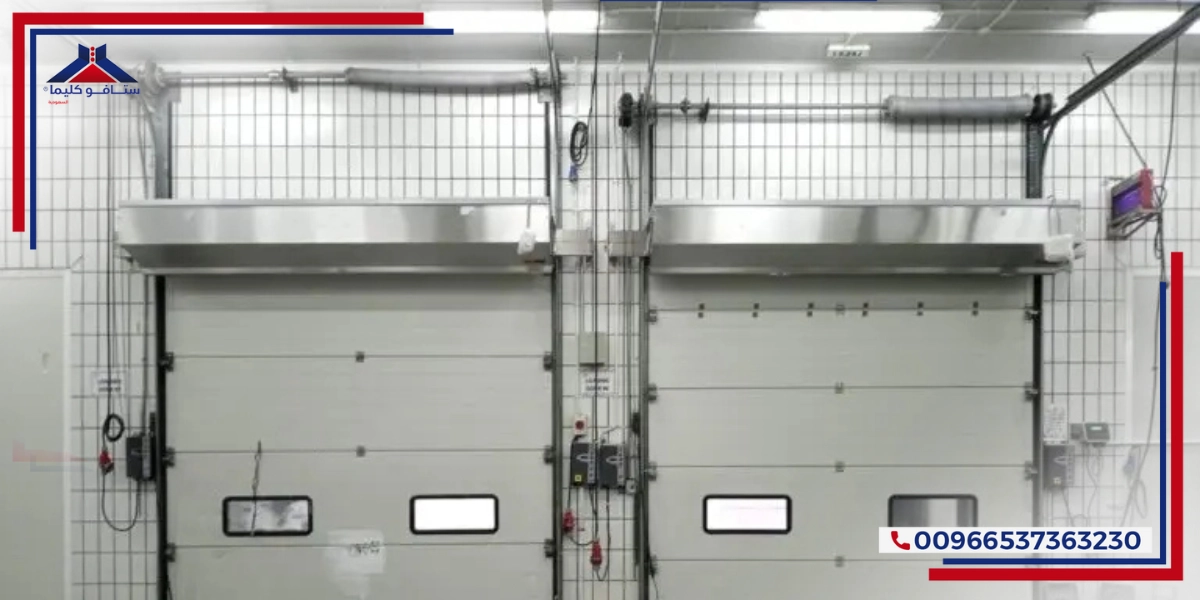
At main entrances, loading doors, reception areas, hospital access points, factory doors, and retail storefronts, the challenge is not usually duct penetration. The challenge is that doors open frequently, allowing outdoor air, heat, dust, humidity, insects, and pollutants to enter.
Air Curtains Do Not Replace Dampers
An air curtain is not a fire damper and should never be used as a substitute for fire-rated duct protection. Fire dampers, smoke dampers, and MSFD dampers are code-related safety components.
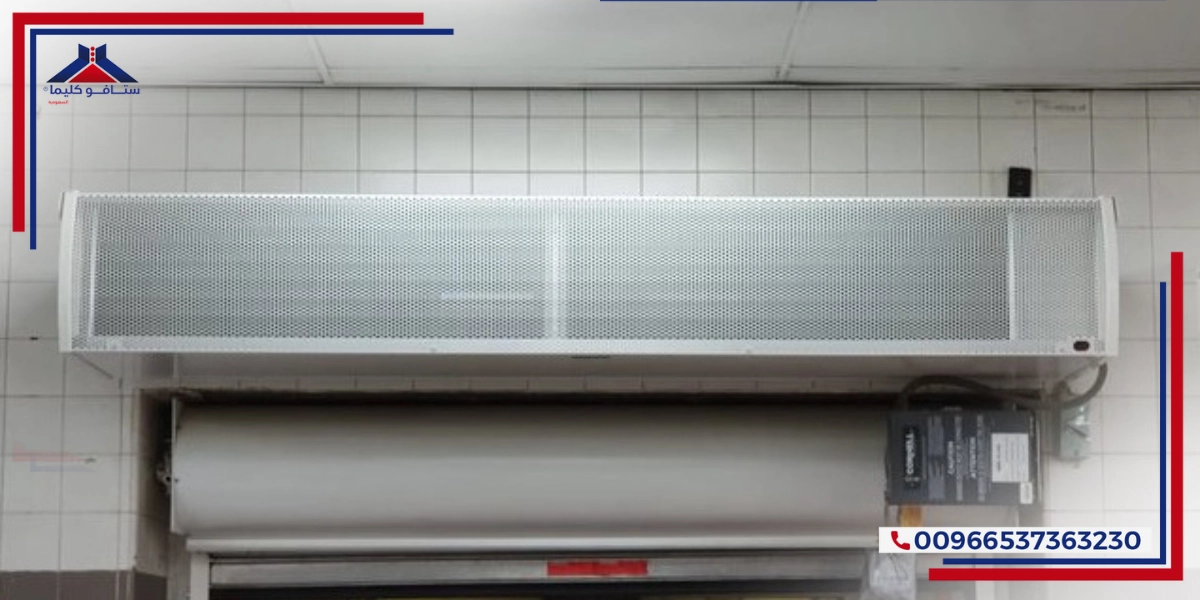
Air curtains are complementary airflow-control devices used at entrances.
How Air Curtains Support Building Air Control?
Air curtains help:
- Reduce hot air infiltration
- Reduce cooled-air loss
- Limit dust and insect entry
- Improve entrance comfort
- Support HVAC energy efficiency
- Reduce pressure disturbance near entrances
- Protect clean or temperature-sensitive environments
Why This Matters?
A building may have properly installed dampers inside the duct system, but still lose conditioned air through open entrances. Air curtains help protect the building envelope at the doorway, while dampers protect duct and compartment pathways.
In simple terms:
- Dampers control air inside duct systems.
- Air curtains control air movement at entrances.
- Both support safer, more efficient, and better-controlled buildings.
Stavoklima Saudi Arabia: Entrance Air Protection That Complements HVAC Damper Systems
At Stavoklima Saudi Arabia, we specialize in air curtain solutions that protect building entrances from uncontrolled air movement. While HVAC dampers control airflow inside ductwork, our air curtains help protect the building at the entrance level.
Our solutions are used in commercial, industrial, healthcare, hospitality, retail, and food-sector facilities where doors open frequently and indoor conditions need to remain stable.
How We Complement HVAC Damper and Air Control Strategies
- We protect entrances, not duct penetrations
Dampers are installed inside ducts and rated assemblies. Our air curtains protect doorways and access points. - We help reduce cooling loss
Air curtains reduce the exchange of cooled indoor air and hot outdoor air at entrances. - We support cleaner indoor environments
Our systems help reduce dust, insects, humidity, smoke, fumes, and outdoor contaminants from entering through open doors. - We improve comfort near access points
Entrance areas are often uncomfortable because of outdoor air infiltration. Air curtains help stabilize these zones. - We recommend the right model for each application
A hospital entrance, factory loading bay, food production door, and corporate lobby each require different air curtain specifications.
If your building already uses HVAC dampers to control duct airflow, complete your air-control strategy at the entrance. Contact Stavoklima Saudi Arabia to choose the right air curtain solution for your facility.
Stavoklima Projects in Saudi Arabia
At Stavoklima Saudi Arabia, our projects show how air curtains complement HVAC systems by protecting entrances, production zones, reception areas, and sensitive environments from uncontrolled air movement. For this article, we selected projects that are different from the previous HVAC articles and relevant to airflow control at entrances.
1. Al Rajhi Food Industries
At Al Rajhi Food Industries, Stavoklima supplied Axi Horizontal air curtains to support environmental quality in an industrial food setting. The project highlights the importance of protecting production and storage environments from harsh external conditions while maintaining cooler, cleaner indoor conditions. The Axi Horizontal model is described as suitable for industrial applications and can cover doors from 2.5 meters up to 6 meters.
2. Safa Investment Company
At Safa Investment Company, Stavoklima used Li Pico air curtains to support comfort at employee entrances, small warehouse doors, and receiving doors. The project page notes that Li Pico can cover heights up to 3 meters and comes in multiple sizes, making it suitable for different workflow and access-point needs.
3. Dallah Al Baraka
At Dallah Al Baraka, the building faced challenges related to temperature differences between indoor and outdoor areas, hot air entry, dust, insects, and exposure from an open sea-facing area. Stavoklima selected air curtains to help maintain a cleaner indoor environment while preserving the building’s visual appearance and supporting comfort.
What These Projects Show
- Air curtains help protect entrances where dampers cannot be used.
- Industrial facilities need airflow control at large doors and production zones.
- Commercial buildings benefit from entrance comfort and dust reduction.
- Each site requires model selection based on door height, traffic, exposure, and installation space.
- Air curtains complement, rather than replace, HVAC dampers and fire-safety devices.
From food factories and warehouses to corporate buildings and commercial entrances, Stavoklima Saudi Arabia helps you protect indoor air from the doorway. Contact our team for a free consultation and model recommendation.
Final Thoughts
HVAC dampers are essential components in air control, balancing, smoke control, and fire protection. A volume damper HVAC device helps balance airflow. A motorized damper HVAC device allows automatic control. A fire damper HVAC device helps protect fire-rated barriers. MSFD in HVAC or MFSD HVAC combines fire and smoke control functions in one motorized damper assembly.
For Saudi projects, damper selection and installation must be handled according to the Saudi Building Code, Civil Defense approvals, manufacturer instructions, and the approved project fire strategy.
But air control does not stop inside ductwork. Building entrances are another major source of uncontrolled air movement. This is where air curtains become an important complementary solution.
A correctly selected damper protects the duct and compartment. A correctly selected air curtain protects the entrance. Together, they support safer, cleaner, more efficient, and better-controlled buildings.
FAQs
When is a Fire Damper required?
A fire damper is commonly required when HVAC ductwork penetrates a fire-rated wall, floor, shaft, or compartment boundary. The exact requirement depends on the building code, fire strategy, barrier rating, duct route, and Civil Defense-approved design.
What is the difference between MSFD and Fire Damper?
A fire damper mainly helps stop fire spread through duct openings. An MSFD, or Motorized Smoke Fire Damper, is designed to help control both fire and smoke movement and is usually operated by an actuator connected to fire alarm or smoke control logic.
What is a VCD in HVAC?
A VCD, or Volume Control Damper, is used to regulate and balance airflow inside ductwork. It is mainly used for air balancing, unlike fire dampers or MSFD dampers, which are related to fire and smoke protection.
What is an Actuator Valve in HVAC?
In damper applications, the correct term is usually damper actuator, not actuator valve. A damper actuator opens, closes, or modulates damper blades. A valve actuator controls water or refrigerant flow in piping systems.
What is a motorized damper HVAC device?
A motorized damper is an HVAC damper operated by an actuator. It can be controlled by a thermostat, BMS, fire alarm system, smoke control system, timer, or sensor depending on the application.
How do air curtains complement Fire Damper systems?
Air curtains do not replace fire dampers. Fire dampers protect fire-rated duct penetrations, while air curtains protect entrances from hot air, dust, insects, humidity, and cooled-air loss. Together, they support better air control at different parts of the building.
What is a back draft damper?
A back draft damper prevents reverse airflow in ducts or openings. It is commonly used in exhaust systems, fan outlets, fresh air systems, and ventilation applications where air should flow in only one direction.
References Used
- NFPA — Basics of Fire and Smoke Damper Installations
https://www.nfpa.org/news-blogs-and-articles/blogs/2021/08/12/basics-of-fire-and-smoke-damper-installations - International Code Council — Fire, Smoke, and Combination Fire/Smoke Damper Fundamentals
https://www.iccsafe.org/building-safety-journal/bsj-technical/codenotes-fire-smoke-and-combination-fire-smoke-damper-fundamentals-in-the-i-codes/ - Saudi Building Code — Building Code 2024, SBC 501 and SBC 801
https://sbc.gov.sa/En/BC/Pages/BuildingCode/BC.aspx?year=2024 - Saudi Fire Protection Code SBC 801 — Public Reference Document
https://www.fire-matrix.org/wp-content/uploads/2021/12/SAUDI-FIRE-CODE-EN.pdf - SMACNA / ANSI Blog — Fire, Smoke & Radiation Damper Installation Guide for HVAC
https://blog.ansi.org/ansi/smacna-fire-smoke-damper-installation-for-hvac/ - Stavoklima Saudi Arabia — Al Rajhi Food Industries Project