



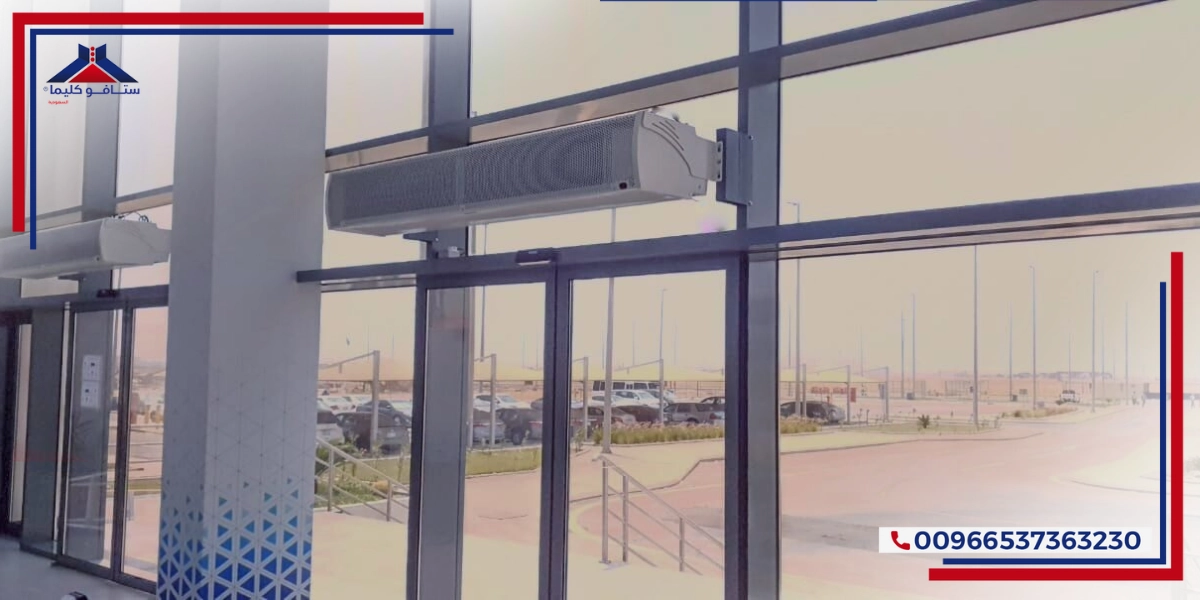
Meat processing plants and butcheries in Saudi Arabia operate in highly sensitive environments that are quickly affected by heat, dust, and insects—especially at entrances that may open dozens of times a day. Even minor outdoor air infiltration can directly impact hygiene, cooling performance, and the facility’s reputation.
Here, air curtains emerge as a practical solution that creates a continuous barrier without disrupting movement or slowing production. In this article, you’ll learn how air curtains support food safety and health compliance inside your facility.
The Importance of Air Curtains in Meat Processing Plants and Butcheries
The importance of air curtains in meat processing plants and butcheries becomes clear when frequent entry and exit are part of daily operations, while food safety remains non-negotiable. Their value is defined through three points directly linked to the nature of work inside these facilities:
Because entrances in butcheries are often open or heavily used, making traditional insulation impractical.
Because meat products are highly sensitive to contamination from dust, outside air, or insects.
Because any disruption to the internal environment can affect reputation and compliance with Saudi health and regulatory requirements.
Read also: Smart Control Technologies for Air Curtains in 2026
Core Roles of Air Curtains in Meat Processing Plants
The core roles of air curtains in meat processing plants stem from one clear reality: the entrance is the weakest point. Through it, insects enter, air leaks occur, contaminants pass through, and workflow is disrupted. The following roles directly address these challenges, with each role leading naturally to its related elements:
Preventing the Entry of Insects and Pests
This role is driven by the fact that open entrances and meat odors create an attractive environment for insects, requiring a continuous barrier without temporary chemical solutions. This is reflected in practice through:
Flies and insects attracted to meat odors.
How the air curtain forms an invisible barrier.
Reducing reliance on chemical pesticides.
Maintaining Cooling and the Cold Chain
This role is linked to the reality that frequent door openings increase cooling load and disrupt temperature stability within work zones, directly affecting product quality. This role is achieved through:
Preventing cold air leakage.
Reducing load on cold rooms.
Stabilizing temperatures inside the work area.
Improving Hygiene Standards and Food Safety
This role relates to the fact that outdoor air carries dust and contaminants that may be invisible but weaken hygiene standards and increase the risk of incidental contamination during daily operations. This role appears through:
Blocking dust, dirt, and contaminated air.
Protecting meat from cross-contamination.
Supporting a healthy production environment.
Facilitating Staff Movement and Meat Handling
This role arises because fast-paced movement inside the plant requires active entrances without sacrificing insulation or cooling—especially with carts and continuous loading. This role is achieved through:
Open doors without losing insulation.
Faster operations without obstruction.
Improved daily productivity.
Read also: The Best Air Curtain for Factories and Warehouses in Saudi Arabia with IP55 Protection
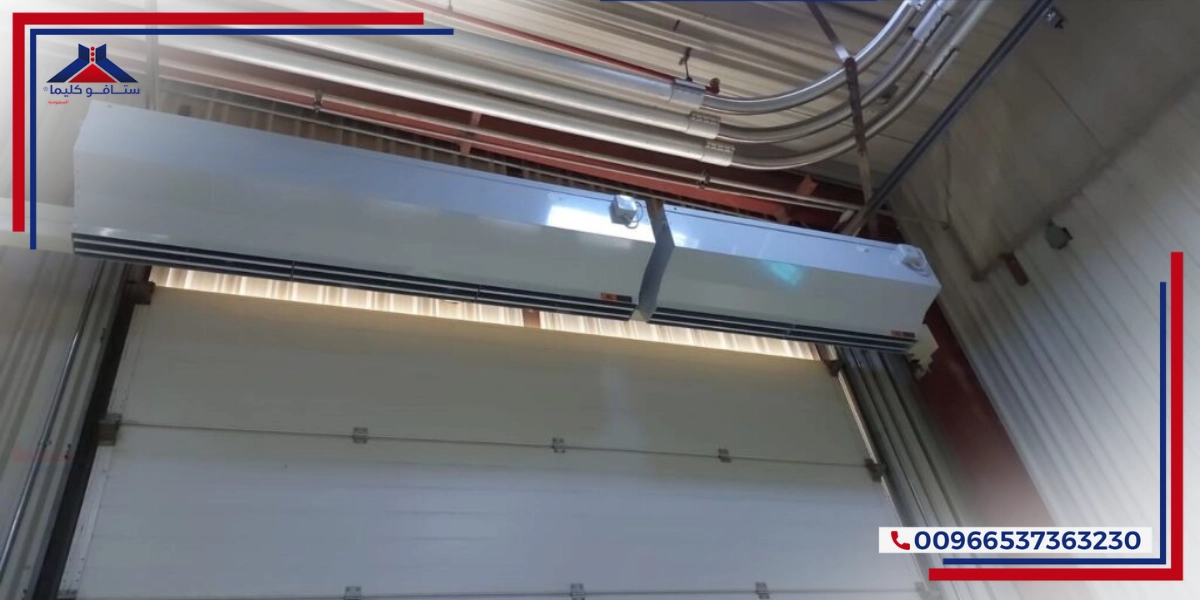
Core Roles of Air Curtains in Meat Processing Plants
The Role of Air Curtains in Compliance with Saudi Health Regulations
Air curtains support compliance with Saudi health regulations because they address a frequent source of inspection notes: open entrances and the insects, dust, and temperature fluctuations that come with them. From this practical role, the following points clearly connect air curtains to health compliance within the facility:
Their relationship with food safety systems such as HACCP by reducing contamination risks at entry points.
Their role in minimizing municipal violations related to insects and outdoor air intrusion.
Their support for health inspections by providing a permanent solution that replaces temporary fixes and maintains operational discipline.
What Specifications Should an Air Curtain for Meat Plants Have?
The specifications of an air curtain suitable for meat processing plants and butcheries depend on its ability to operate at active entrances while maintaining an air barrier that reduces insects and protects cooling. Key specifications that should be available in air curtains designed for meat plants include:
Adequate airflow power for large entrances and loading doors.
Reliable performance in hot and dusty environments without loss of efficiency.
Continuous operation capability for long daily operating hours.
Availability of maintenance and spare parts within Saudi Arabia to minimize downtime.
Read also: Air Curtain Care Guide: How to Maintain Air Curtains
Stavoklima Projects in Food and Industrial Facilities Similar to Meat Plants
Agwat Food Industries Project
Air curtains were installed at active operational entrances at Agwat Food Industries to reduce outdoor air and insect entry while maintaining smooth movement. Such projects help enhance environmental discipline within work zones without hindering receiving and dispatch operations. The result is typically improved operational stability and reduced reliance on temporary solutions.
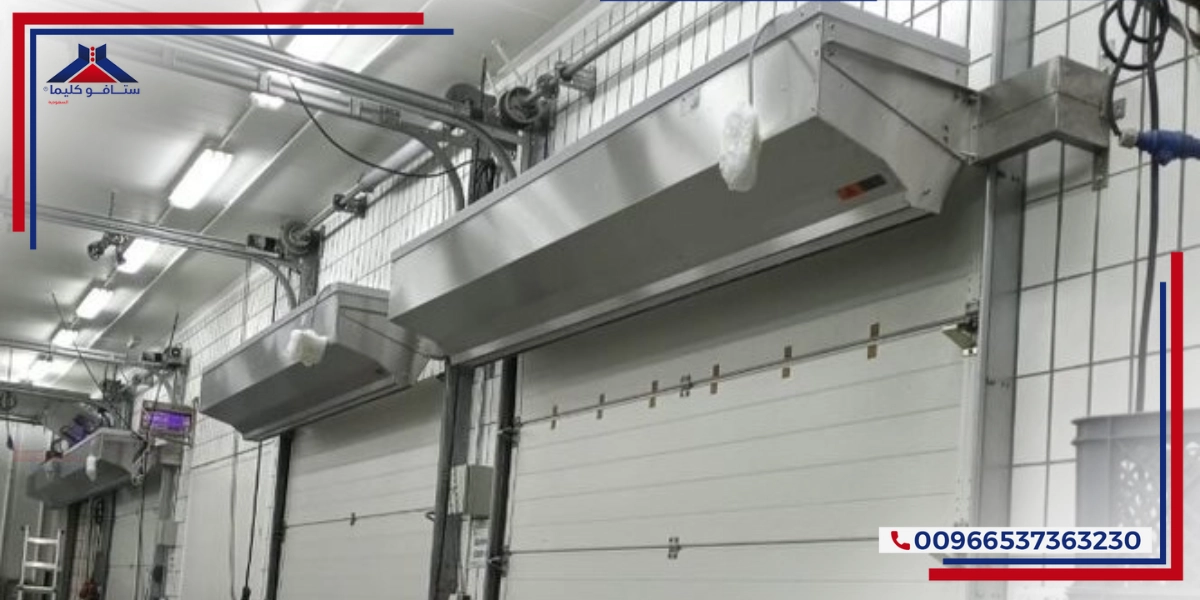
Air Curtains at Agwat Industrial Company (Al Baik Restaurant)
Almarai Factory Project
Air curtains were installed at an Almarai factory to support environmental stability related to cooling and to reduce the impact of frequent door openings on temperature levels. This contributes to lowering cooling loads and improving stability within cold-chain-related operational areas. It also provides better indicators during health inspections, as entrance control becomes part of the overall safety system.
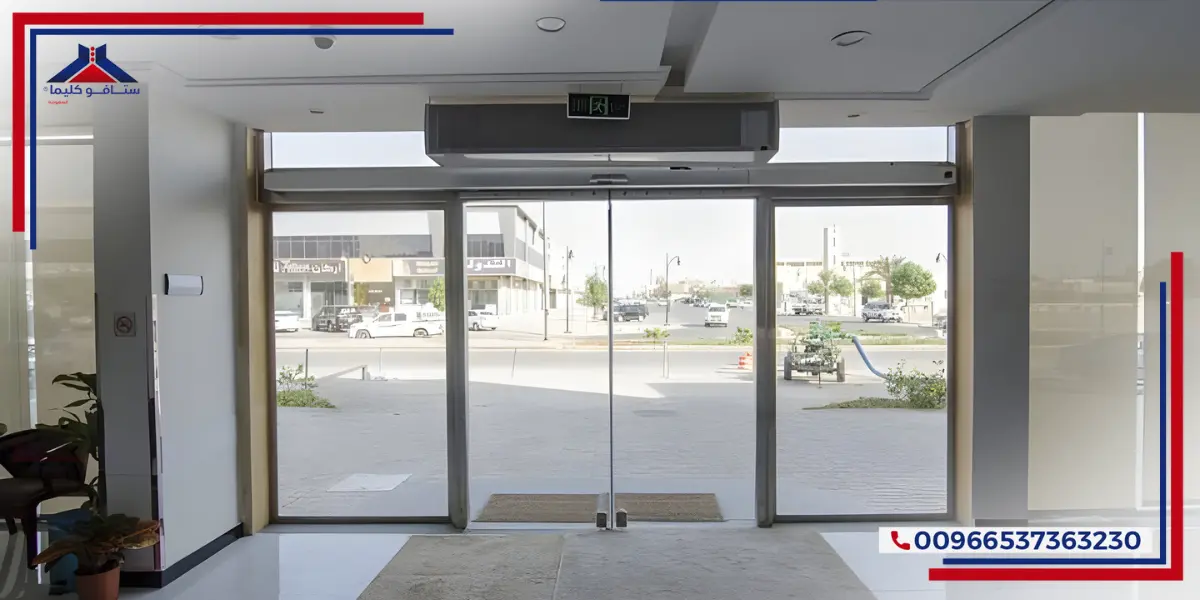
Stavoklima Air Curtains at Almarai Factory
SADAFCO Project
SADAFCO adopted air curtain solutions at operational entrances requiring continuous movement while controlling air and dust infiltration. This application suits sensitive environments similar to meat processing plants, where hygiene requirements intersect with daily productivity. It highlights the importance of selecting an industrial-grade unit suited to the entrance size and operational load rather than relying on undersized solutions.
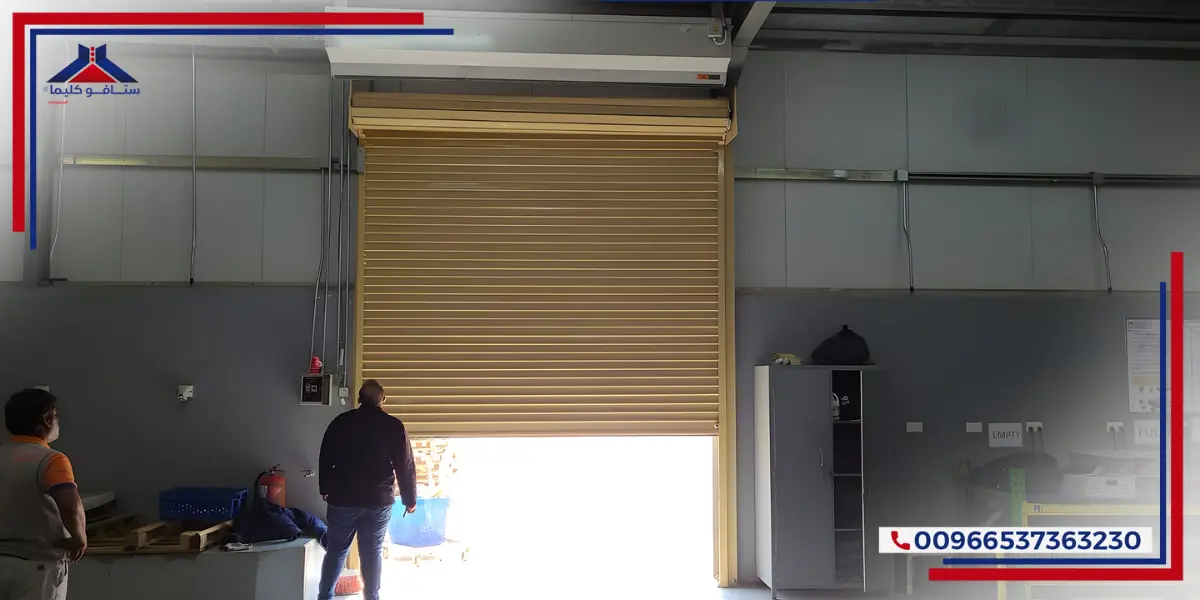
Axi Horizontal Air Curtains in SADAFCO Factories
Common Mistakes When Installing Air Curtains in Butcheries
Installing an air curtain in butcheries becomes a critical point because the goal is not merely placing a device above the door, but creating an effective air barrier that blocks flies, dust, and preserves cooling. When this goal is compromised due to incorrect selection, height, or adjustment, the same problems reappear immediately at the entrance. The following mistakes are therefore the most common:
Choosing a unit that is weaker than required relative to entrance width and height, resulting in an incomplete air barrier and continued air leakage.
Installing the air curtain at an unsuitable height or without precise alignment, creating gaps that allow insects and dust to enter.
Neglecting periodic maintenance after installation, leading to reduced airflow, odor buildup, and gradual performance decline.
Relying on non-specialized installation without proper adjustment of air angle and speed, causing the unit to operate visually but without real effectiveness.
Is Your Facility Truly Protected? Contact Stavoklima for an Assessment
Protecting your facility often starts from a single, commonly overlooked point: the entrance—and what it brings in terms of insects, dust, and cooling instability with every movement. When an air curtain does not match the entrance dimensions or operating environment of butcheries and meat processing plants, its impact remains limited regardless of product quality.
A professional assessment helps determine whether the air barrier is performing correctly and whether installation and settings truly support food safety and productivity—or leave unseen gaps. With Stavoklima’s industrial solutions and experience in food-sector projects across Saudi Arabia, you can reach a suitable option that reduces operational risks and improves health compliance.
Contact Stavoklima now for an assessment and book a consultation that helps you protect your facility effectively.
Frequently Asked Questions About Air Curtains in Meat Processing Plants and Butcheries
1. What are the benefits of air curtains in meat processing plants?
They reduce the entry of insects and dust, maintain cooling and the cold chain, and support a clean environment with faster workflow at entrances.
2. Do air curtains help prevent flies in butcheries?
Yes, they form an air barrier that reduces fly and insect entry through entrances, provided the correct power is selected and installation and angle are properly adjusted.
3. Do air curtains affect meat cooling temperatures?
They typically improve thermal stability by reducing outdoor air infiltration, easing the load on cooling systems and maintaining cooler work areas.
4. Can air curtains operate continuously in factories?
Yes, if they are industrial-grade units designed for long operating hours, with regular maintenance, filter cleaning, and appropriate speed settings.